My Cart
Your Cart 0

    Your cart is empty.

  • Total (Amount) ₹0.00
NCERT · Class 11 · Chemistry

Chapter 4: Chemical Bonding and Molecular Structure

Practice each question, then open the answer or worked solution.

Questions

40 questions
Q1Written answer

Explain the formation of a chemical bond.

Show solutionHide solution
Worked solution

“A chemical bond is an attractive force that bonds the constituents of a chemical species together.”

So many theories are suggested for chemical bond formation, such as valence shell electron pair repulsion theory, electronic theory, molecular orbital theory and valence bond theory.

The formation of a chemical bond is credited to the tendency of a system to achieve stability. It was noticed that the inertness of noble gasses is the direct result of their completely filled outermost orbitals. Consequently, it was proposed that the elements having a deficiency of electrons in outermost shells are unstable. Thus, atoms combine with one another and finish their separate octets or duplets to achieve the stable configuration of the closest inert gasses. So, this combination may occur either by sharing of electrons. The chemical bond formed as a result of sharing of electrons among atoms is known as a covalent bond.  Also, an ionic bond is formed as a result of sharing of electrons among atoms.

 

Q2Written answer

Write Lewis dot symbols for atoms of the following elements :

a) Mg

b) Na

c) B

d) O

e) N

f) Br

Show solutionHide solution
Worked solution

a) Mg

The magnesium atom contains only 2 valence electrons. Thus, the Lewis dot symbols for Mg is

NCERT Solutions for Class 11 Chemistry- Chapter 4 (Chemical Bonding and Molecular Structure image 1

b) Na

The sodium atom contains only 1 valence electron. Thus, the Lewis dot symbol for Na is

\(\begin{array}{l}Na\cdot\end{array} \)

c) B

The boron atom contains only 3 valence electrons. Thus, the Lewis dot symbols for B is

NCERT Solutions for Class 11 Chemistry- Chapter 4 Chemical Bonding and Molecular Structure image 2

d) O

The oxygen atom contains only 6 valence electrons. Thus, the Lewis dot symbol for O is

NCERT Solutions for Class 11 Chemistry- Chapter 4 Chemical Bonding and Molecular Structure image 3

e) N

The nitrogen atom contains only 5 valence electrons. Thus, the Lewis dot symbol for N is

NCERT Solutions for Class 11 Chemistry- Chapter 4 Chemical Bonding and Molecular Structure image 4

f) Br

The bromine atom contains only 7 valence electrons. Thus, the Lewis dot symbols for Br is

NCERT Solutions for Class 11 Chemistry- Chapter 4 Chemical Bonding and Molecular Structure image 5

Q3Written answer

Write Lewis symbols for the following atoms and ions: 

S and S2-; Al and Al3+; H and H–

Show solutionHide solution
Worked solution

For S and S2-

The sulphur atom contains only 6 valence electrons. Thus, the Lewis dot symbol for S is

NCERT Solutions for Class 11 Chemistry- Chapter 4 Chemical Bonding and Molecular Structure image 6

The bi-negative charge on sulphur indicates that it has gained 2 electrons. So, there are six valance electrons plus two gained electrons.

Thus the Lewis dot symbol is

NCERT Solutions for Class 11 Chemistry- Chapter 4 Chemical Bonding and Molecular Structure image 7

For Al and Al3+

An aluminium atom contains only 3 valence electrons. Thus, the Lewis dot symbols for Al is

NCERT Solutions for Class 11 Chemistry- Chapter 4 Chemical Bonding and Molecular Structure image 8

The tri-positive charge on aluminium indicates that it has donated 3 electrons.

Thus, the Lewis dot symbol is

\(\begin{array}{l}[Al]^{3+}\end{array} \)


For H and H–

The hydrogen atom contains only 1 valence electron. Thus, the Lewis dot symbol for H is

\(\begin{array}{l}H\cdot\end{array} \)

The single negative charge on hydrogen indicates that it has gained 1 electron. So, one valance electron plus one gained electron.

Thus lewis dot symbol is

NCERT Solutions for Class 11 Chemistry- Chapter 4 Chemical Bonding and Molecular Structure image 9

Q4Written answer

Draw the Lewis structures for the following molecules and ions :

H2S, SiCl4, BeF2, 

\(\begin{array}{l}CO_{3}^{2-}\end{array} \)
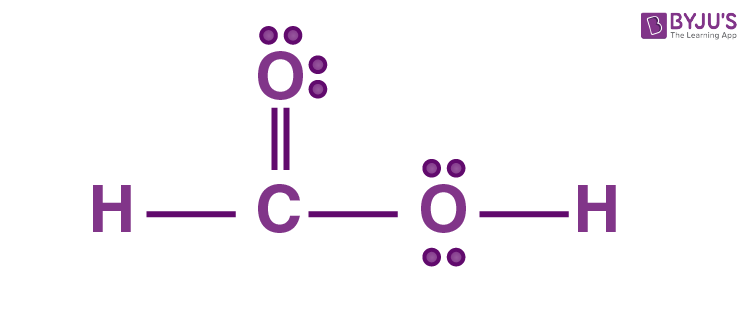
, HCOOH

Show solutionHide solution
Worked solution

H2S

NCERT Solutions for Class 11 Chemistry- Chapter 4 Chemical Bonding and Molecular Structure image 10

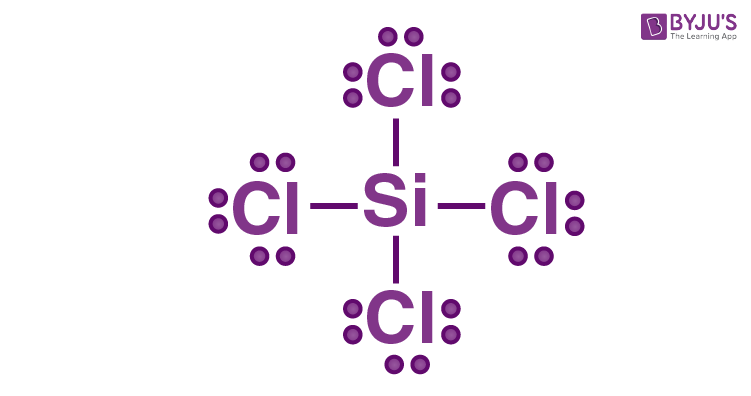
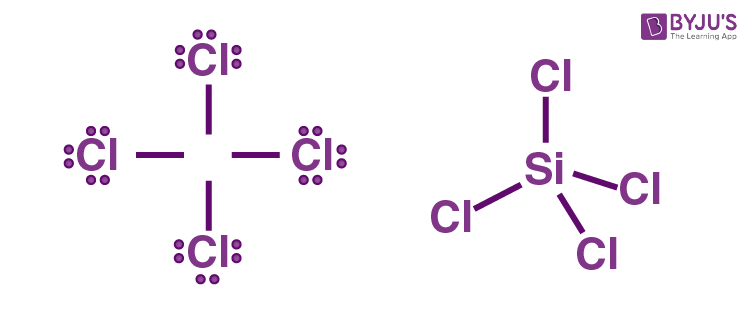
SiCl4

NCERT Solutions for Class 11 Chemistry- Chapter 4 Chemical Bonding and Molecular Structure image 11

BeF2

NCERT Solutions for Class 11 Chemistry- Chapter 4 Chemical Bonding and Molecular Structure image 12

\(\begin{array}{l}CO_{3}^{2-}\end{array} \)

NCERT Solutions for Class 11 Chemistry- Chapter 4 Chemical Bonding and Molecular Structure image 13

HCOOH

Q5Written answer

NCERT Solutions for Class 11 Chemistry- Chapter 4 Chemical Bonding and Molecular Structure image 14
Define the octet rule. Write its significance and limitations.

Show solutionHide solution
Worked solution

Octet rule says, “Atoms can combine either by transfer of valence electrons from one atom to another or by sharing their valence electrons in order to achieve the nearest inert gas configuration by having an octet in their valence shell.”

Octet rule explains chemical bond formation depending upon the nature of the element.

Limitations:

(a) Octet rule fails to predict the relative stability and shape of the molecules.

(b) It is based on the inert nature of noble gases. But, some inert gases, say krypton(Kr) and xenon(Xe), form compounds like KrF2, XeF2 etc.

(c) For elements beyond the 3rd period, the octet rule cannot be applied. Elements present beyond the 3rd period have more than 8 valence electrons surrounding the central atom. E.g. SF6, PF6 etc.

NCERT Solutions for Class 11 Chemistry- Chapter 4 Chemical Bonding and Molecular Structure image 15

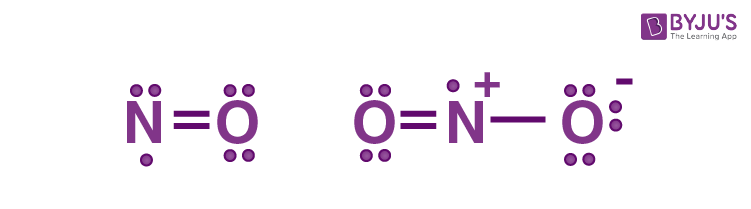
(d) For atoms in a molecule having an odd number of electrons, the octet rule is not applied. E.g. For No2 and NO octet rule is not applicable.

NCERT Solutions for Class 11 Chemistry- Chapter 4 Chemical Bonding and Molecular Structure image 16

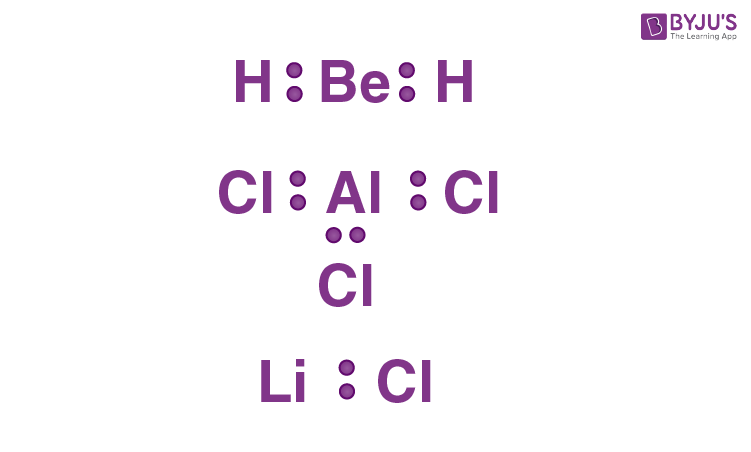
(e) If a compound has less than 8 electrons surrounding the central atom, then the octet rule cannot be applied to that compound. E.g. BeH2, AlCl3, LiCl etc., does not obey the octet rule.

NCERT Solutions for Class 11 Chemistry- Chapter 4 Chemical Bonding and Molecular Structure image 17


Q6Written answer

Write the favourable factors for the formation of an ionic bond.

Show solutionHide solution
Worked solution

The formation of an ionic bond takes place through the transfer of 1 or more electrons from one atom to another. Thus, ionic bond formation depends on the flexibility of neutral atoms to lose or gain electrons. The formation of an ionic bond also depends on the lattice energy of the compound which is formed.

The factors that are favourable for ionic bond formation:

(a) High electron affinity of atoms of non-metals.

(b) The high lattice energy of the compound which is formed.

(c) Low ionization enthalpy of an atom of metal.


Q7Written answer

Discuss the shape of the following molecules using the VSEPR model:

BeCl2, BCl3, SiCl4, AsF5, H2S, PH3

Show solutionHide solution
Worked solution

BeCl2

The central atom does not have any lone pair but has 2 bond pairs. Thus, its shape is AB2, i.e., linear shape.

NCERT Solutions for Class 11 Chemistry- Chapter 4 Chemical Bonding and Molecular Structure image 18

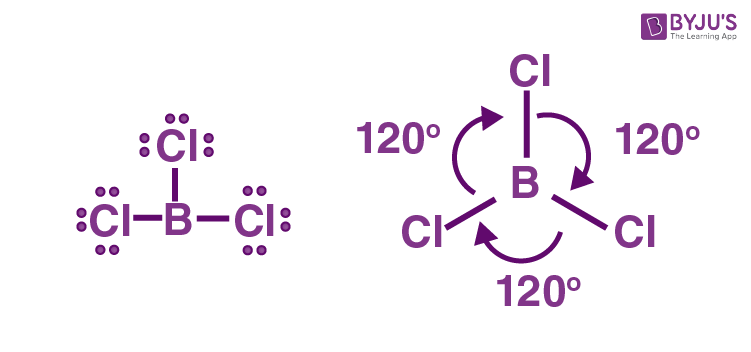
BCl3

The central atom does not have any lone pair but has 3 bond pairs. Thus, its shape is AB3, i.e., trigonal planar.

NCERT Solutions for Class 11 Chemistry- Chapter 4 Chemical Bonding and Molecular Structure image 19

SiCl4

The central atom does not have any lone pair but has 4 bond pairs. Thus, its shape is AB4,  i.e., tetrahedral.

NCERT Solutions for Class 11 Chemistry- Chapter 4 Chemical Bonding and Molecular Structure image 20

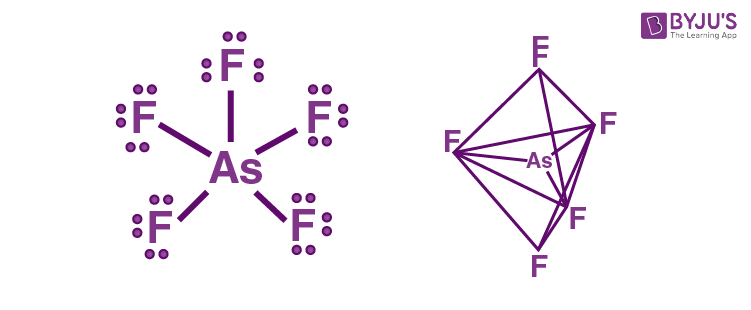
AsF5

The central atom does not have any lone pair but has 5 bond pairs. Thus, its shape is AB5, i.e., trigonal bipyramidal.

NCERT Solutions for Class 11 Chemistry- Chapter 4 Chemical Bonding and Molecular Structure image 21


H2S

The central atom has 1 lone pair and has 2 bond pairs. Thus, its shape is AB2E, i.e., bent shape.

NCERT Solutions for Class 11 Chemistry- Chapter 4 Chemical Bonding and Molecular Structure image 22

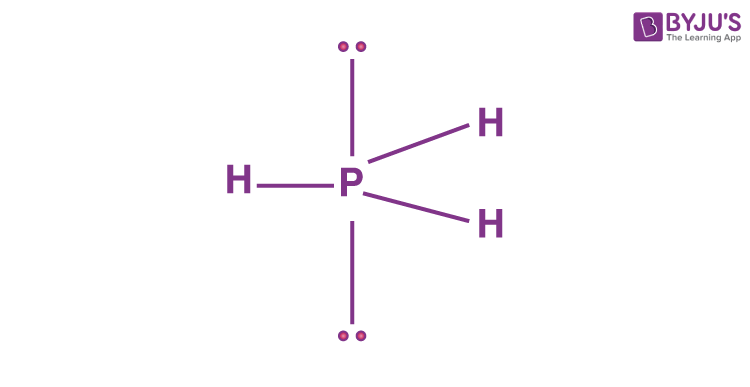
PH3

The central atom has 1 lone pair and has 3 bond pairs. Thus, its shape is AB3E, i.e.,trigonalbipyramidal.

NCERT Solutions for Class 11 Chemistry- Chapter 4 Chemical Bonding and Molecular Structure image 23


Q8Written answer

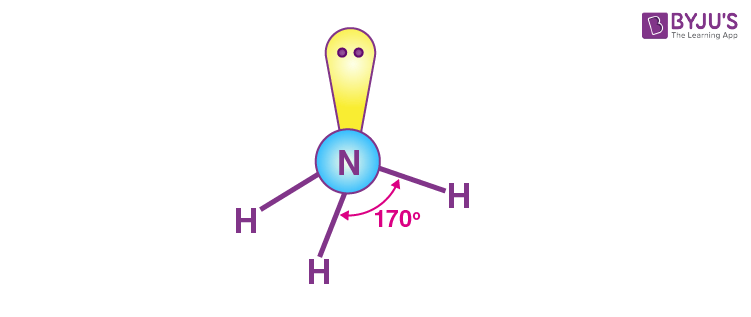
Although geometries of NH3 and H2O molecules are distorted tetrahedral, the bond angle in water is less than that of  ammonia. Discuss.

Show solutionHide solution
Worked solution

The geometry of H2O and NH3:

NCERT Solutions for Class 11 Chemistry- Chapter 4 Chemical Bonding and Molecular Structure image 24

NCERT Solutions for Class 11 Chemistry- Chapter 4 Chemical Bonding and Molecular Structure image 25

The central atom(N) in ammonia has 1 lone pair and has 3 bond pairs.

The central atom(O) in water has 2 lone pairs and has 2 bond pairs.

Thus, these 2 lone pairs on O- atom in the water molecule repels the 2 bond pairs. And this repulsion between the lone pair and the bond pair on O- atom of H2O is stronger than the repulsion between the lone pair and bond pair on the N-atom of NH3.

Thus, the bond angle in H2O is less than NH3, even though they have a distorted tetrahedral structure.


Q9Written answer

How do you express the bond strength in terms of bond order?

Show solutionHide solution
Worked solution

The extent of bonding which occurs between two atoms while forming a molecule is represented by bond strength. As the bond strength increases, the bond becomes stronger, and the bond order increases.


Q10Written answer

Define Bond length.

Show solutionHide solution
Worked solution

“Bond length is defined as the equilibrium distance between the nuclei of 2 bonded atoms in a molecule.”