Define growth, differentiation, development, dedifferentiation, development, redifferentiation, determinate growth, meristem and growth rate.
Show solutionHide solution
Growth – It is an irreversible, permanent increase in the size of an organ or its parts or even of an individual cell. Growth is supplemented by metabolic activities taking place due to the energy.
Differentiation – The cells derived from root apical and shoot-apical meristems and cambium differentiate and mature to perform specific functions. This act leading to maturation is termed differentiation.
Development – All the changes that organisms go through in their lifetime are called development.
Dedifferentiation – Plants which has lost the capacity to divide can regain the capacity under certain conditions. This phenomenon is called dedifferentiation. Example: meristem formation.
Redifferentiation – Dedifferentiation produces cells that once again lose the capacity to divide but mature to perform specific functions are said to be redifferentiated.
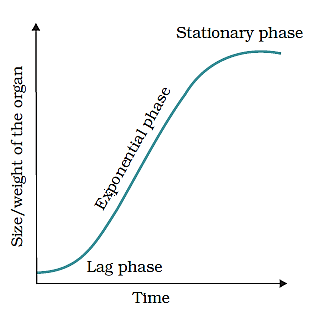
Determinate growth – The ability of a cell, tissue or organism to grow for a certain period is called determinate growth. In most plants, growth is indefinite, where some plants grow to a certain level and then stop growing.
Meristem – Plant tissue containing undifferentiated cells (meristematic cells) is called meristem.
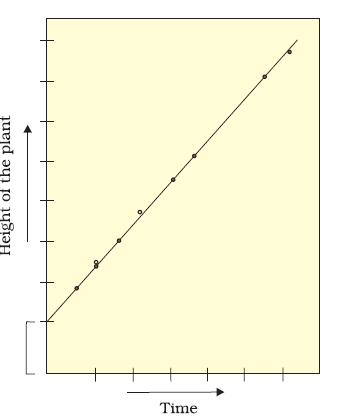
Growth rate – The increase in growth per unit of time is called a growth rate.