Difficulty distribution
How the classified questions are distributed by difficulty.
6questions
Not classified
6
100%
Your cart is empty.
Practice Rotational Motion - Mechanics - Physics previous year questions organised from real papers, with year-wise coverage and clear topic navigation.
Every graph below is calculated only from this selection.
Year-wise coverage for Rotational Motion. Each bar uses a separate theme-derived color.
How the classified questions are distributed by difficulty.
MCQ, numerical, multiple-select and other formats found in these papers.
Top subjects by unique question coverage.
Top topics across the included previous year papers.
Top subtopics inside this exact selection.
Question coverage for the most populated papers. Every active PYP paper remains listed below.
Newest papers appear first. Sort by year, question coverage or name.
| Paper | Year / session | Questions in this view | Open |
|---|---|---|---|
| VITEEE 2024 | 2024 | 1 | View paper |
| VITEEE 2023 | 2023 | 3 | View paper |
| VITEEE 2022 | 2022 | 2 | View paper |
Practice every matching question in batches of 20, with every available option.
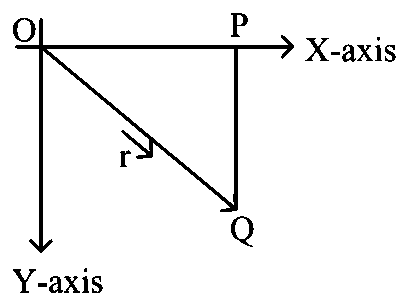
A particle of mass \(m\) is allowed to fall freely under gravity from a point \(P\) as shown in the figure. If the vector position \(Q\) of the particle from the origin is represented by \(\mathbf{r}\), the magnitude of torque acting on the particle at time \(t\) with respect to the origin \(O\) is.
Consider a rod of mass \(M\) and length \(L\) pivoted at its centre free to rotate in a vertical plane. The rod is at rest in the vertical position. A bullet of mass \(M\) moving horizontal at a speed \(v\) strikes and gets embedded in one end of the rod. The angular velocity of the rod just after the collision will be
A solid sphere having mass \(m\) and radius \(R\) moves down a plane inclined at an angle '\(\theta\)'. Find the ratio between its acceleration when it rolls without slipping and its acceleration when it slides down the same plane without any rotation.
A particle of mass $m$ is projected with a velocity \(v\) making an angle of \(45^{\circ}\) with the horizontal. The magnitude of angular momentum of the projectile about the point of projection when the particle is at its maximum height \(h\) is.

A uniform cube of side $a$ and mass $m$ rests on a rough horizontal table. A horizontal force $F$ is applied normal to one of the faces at a point that is directly above the centre of the faces at a point that is directly above the centre of the face at a height 3a/4 above the base. The minimum value of F for which the cube begins to topple an edge is (assume that cube does not slide)
Moment of a force of magnitude 10 N acting along positive $y$-direction at point $(2 \mathrm{~m}, 0,0)$ about the point $(0,1 \mathrm{~m}, 0)$ in $\mathrm{N}-\mathrm{m}$ is