My Cart
Your Cart 0

    Your cart is empty.

  • Total (Amount) ₹0.00
Previous year question hub

Single-variable Calculus and Integration - Calculus - Statistics Previous Year Questions

Practice Single-variable Calculus and Integration - Calculus - Statistics previous year questions organised from real papers, with year-wise coverage and clear topic navigation.

8Papers
8Years
26Questions
1Topics

Single-variable Calculus and Integration question pattern

Every graph below is calculated only from this selection.

Questions by year

Year-wise coverage for Single-variable Calculus and Integration. Each bar uses a separate theme-derived color.

Difficulty distribution

How the classified questions are distributed by difficulty.

Medium 19 73.1%
Easy 5 19.2%
Hard 2 7.7%
Question type distribution

MCQ, numerical, multiple-select and other formats found in these papers.

MCQ 15 57.7%
Numerical Answer Type (NAT) 9 34.6%
MSQ 2 7.7%

Subject weightage

Top subjects by unique question coverage.

Statistics
26 Qs

Most asked topics

Top topics across the included previous year papers.

Calculus
26 Qs

Subtopic coverage

Top subtopics inside this exact selection.

Single-variable Calculus and Integration
26 Qs

Paper coverage

Question coverage for the most populated papers. Every active PYP paper remains listed below.

Statistics (ST) 2026
4 Qs
Statistics (ST) 2025
3 Qs
Statistics (ST) 2024
2 Qs
Statistics (ST) 2023
3 Qs
Statistics (ST) 2022
2 Qs
Statistics (ST) 2021
5 Qs
Statistics (ST) 2020
2 Qs
Statistics (ST) 2019
5 Qs

Included previous year papers

Newest papers appear first. Sort by year, question coverage or name.

PaperYear / sessionQuestions in this viewOpen
Statistics (ST) 202620264View paper
Statistics (ST) 202520253View paper
Statistics (ST) 202420242View paper
Statistics (ST) 202320233View paper
Statistics (ST) 202220222View paper
Statistics (ST) 202120215View paper
Statistics (ST) 202020202View paper
Statistics (ST) 201920195View paper

All Single-variable Calculus and Integration previous year questions

Practice every matching question in batches of 20, with every available option.

1
2019 · Statistics · Calculus · Single-variable Calculus and Integration
Statistics (ST) 2019
\[\lim_{n\to\infty}\sum_{k=1}^{n}\frac{n}{n^2+k^2}\] is equal to
Open complete paper
2
2019 · Statistics · Calculus · Single-variable Calculus and Integration
Statistics (ST) 2019
Let \(\vec{F} = (x-y+z)(\vec{i}+\vec{j})\) be a vector field on \(\mathbb{R}^3\). The line integral \(\int_C \vec{F} \cdot d\vec{r}\), where \(C\) is the triangle with vertices \((0,0,0), (5,0,0)\) and \((5,5,0)\) traversed in that order is
Open complete paper
3
2019 · Statistics · Calculus · Single-variable Calculus and Integration
Statistics (ST) 2019
Let \( f \) be a continuous and positive real valued function on \( [0, 1] \). Then \( \int_0^\pi f(\sin x) \cos x \, dx \) is equal to ...
Open complete paper
4
2019 · Statistics · Calculus · Single-variable Calculus and Integration
Statistics (ST) 2019
Let \( S \) be the solid whose base is the region in the \( xy \)-plane bounded by the curves \( y = x^2 \) and \( y = 8 - x^2 \), and whose cross-sections perpendicular to the \( x \)-axis are squares. Then the volume of \( S \) (rounded off to two decimal places) is ...
Open complete paper
5
2019 · Statistics · Calculus · Single-variable Calculus and Integration
Statistics (ST) 2019
Let \(f: \mathbb{R} \to \mathbb{R}\) be defined by \(f(x) = (3x^2 + 4) \cos x\). Then \(\lim_{h \to 0} \frac{f(h)+f(-h)-8}{h^2}\) is equal to ...
Open complete paper
6
2020 · Statistics · Calculus · Single-variable Calculus and Integration
Statistics (ST) 2020

Which of the following functions is uniformly continuous on the specified domain?

Open complete paper
7
2020 · Statistics · Calculus · Single-variable Calculus and Integration
Statistics (ST) 2020
Let \(D = \{(x, y, z) \in \mathbb{R} \times \mathbb{R} \times \mathbb{R} : 0 \le x, y, z \le 1, x + y + z \le 1\}\), where \(\mathbb{R}\) denotes the set of all real numbers. If \[ I = \iiint_D (x + y) \, dx \, dy \, dz, \] then \(84 \times I\) = ____________________
Open complete paper
8
2021 · Statistics · Calculus · Single-variable Calculus and Integration
Statistics (ST) 2021
\(\lim_{n \to \infty} \left( 2^n + n 2^n \sin^2 \frac{n}{2} \right)^{\frac{1}{2n - n \cos \frac{1}{n}}}\) equals ________
Open complete paper
9
2021 · Statistics · Calculus · Single-variable Calculus and Integration
Statistics (ST) 2021
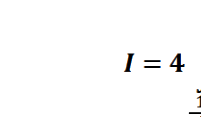
Let \(I = 4 \int_{\frac{1}{\sqrt{2}}}^{1} \int_{\sqrt{1-x^2}}^{x} \frac{1}{\sqrt{x^2 + y^2}} \, dy \, dx\) Then the value of $e^{I+\pi}$ equals ________ (round off to 2 decimal places).

Question diagram

Open complete paper
10
2021 · Statistics · Calculus · Single-variable Calculus and Integration
Statistics (ST) 2021
Let \( f: \mathbb{R} \to \mathbb{R} \) be defined by \[ f(x) = \begin{cases} x^3 \sin x, & x = 0 \text{ or } x \text{ is irrational}, \\ \frac{1}{q^3}, & x = \frac{p}{q} \in \mathbb{Z} \setminus \{0\}, q \in \mathbb{N} \text{ and } \gcd(p,q) = 1, \end{cases} \) where \( \mathbb{R} \) denotes the set of all real numbers, \( \mathbb{Z} \) denotes the set of all integers, \( \mathbb{N} \) denotes the set of all positive integers and \( \gcd(p,q) \) denotes the greatest common divisor of \( p \) and \( q \). Then which one of the following statements is true?
Open complete paper
11
2021 · Statistics · Calculus · Single-variable Calculus and Integration
Statistics (ST) 2021
Let \( f: [0, \infty) \to \mathbb{R} \) be a function, where \( \mathbb{R} \) denotes the set of all real numbers. Then which one of the following statements is true?
Open complete paper
12
2021 · Statistics · Calculus · Single-variable Calculus and Integration
Statistics (ST) 2021
Let \( f: \mathbb{R} \to \mathbb{R} \) be a differentiable function such that \( f(0) = 0 \) and \( f'(x) + 2f(x) > 0 \) for all \( x \in \mathbb{R} \), where \( f' \) denotes the derivative of \( f \) and \( \mathbb{R} \) denotes the set of all real numbers. Then which one of the following statements is true?
Open complete paper
13
2022 · Statistics · Calculus · Single-variable Calculus and Integration
Statistics (ST) 2022
If the line \( y = \alpha x, \alpha \geq \sqrt{2} \), divides the area of the region
\( R := \{(x, y) \in \mathbb{R}^2 \mid 0 \leq x \leq \sqrt{y}, 0 \leq y \leq 2\} \)
into two equal parts, then the value of \( \alpha \) is equal to
Open complete paper
14
2022 · Statistics · Calculus · Single-variable Calculus and Integration
Statistics (ST) 2022
Which of the following real valued functions is/are uniformly continuous on \( [0, \infty) \)?
Open complete paper
15
2023 · Statistics · Calculus · Single-variable Calculus and Integration
Statistics (ST) 2023
The area of the region bounded by the parabola \( x = -y^2 \) and the line \( y = x + 2 \) equals
Open complete paper
16
2023 · Statistics · Calculus · Single-variable Calculus and Integration
Statistics (ST) 2023
Let \(g(x) = f(x) + f(2 - x)\) for all \(x \in [0, 2]\), where \(f: [0, 2] \to \mathbb{R}\) is continuous on \([0, 2]\) and twice differentiable on \((0, 2)\). If \(g'\) denotes the derivative of \(g\) and \(f''\) denotes the second derivative of \(f\), then which one of the following statements is NOT true?
Open complete paper
17
2023 · Statistics · Calculus · Single-variable Calculus and Integration
Statistics (ST) 2023
Let \( f \) be a continuous function from \( [0,1] \) to the set of all real numbers. Then which one of the following statements is NOT true?
Open complete paper
18
2024 · Statistics · Calculus · Single-variable Calculus and Integration
Statistics (ST) 2024
Let \( D \) be the region bounded by the line \( y = x \) and the parabola \( y = 4x - x^2 \). Then \( \iint_D x \, dx \, dy \) equals
Open complete paper
19
2024 · Statistics · Calculus · Single-variable Calculus and Integration
Statistics (ST) 2024
If \( f: [-2, 2] \to \mathbb{R} \) is a continuous function, then which of the following statements is/are true?
Open complete paper
20
2025 · Statistics · Calculus · Single-variable Calculus and Integration
Statistics (ST) 2025
Let \( f: [0, \infty) \to [0, \infty) \) be a differentiable function with \( f(x) > 0 \) for all \( x > 0 \), and \( f(0) = 0 \). Further, \( f \) satisfies
\[ (f(x))^2 = \int_{0}^{x} \left( (f(t))^2 + f(t) \right) dt \, \, , \, \, x > 0. \]
Then which one of the following options is correct?
Open complete paper

Showing 20 of 26 questions