Difficulty distribution
How the classified questions are distributed by difficulty.
Your cart is empty.
Practice Product Design and Development - Industrial Engineering - Production & Industrial Engineering previous year questions organised from real papers, with year-wise coverage and clear topic navigation.
Every graph below is calculated only from this selection.
Year-wise coverage for Product Design and Development. Each bar uses a separate theme-derived color.
How the classified questions are distributed by difficulty.
MCQ, numerical, multiple-select and other formats found in these papers.
Top subjects by unique question coverage.
Top topics across the included previous year papers.
Top subtopics inside this exact selection.
Question coverage for the most populated papers. Every active PYP paper remains listed below.
Newest papers appear first. Sort by year, question coverage or name.
| Paper | Year / session | Questions in this view | Open |
|---|---|---|---|
| Production and Industrial Engineering (PI) 2026 | 2026 | 1 | View paper |
| Production & Industrial Engineering (PI) 2025 | 2025 | 2 | View paper |
| Production & Industrial Engineering (PI) 2024 | 2024 | 2 | View paper |
| Production & Industrial Engineering (PI) 2022 | 2022 | 2 | View paper |
| Production & Industrial Engineering (PI) 2021 | 2021 | 1 | View paper |
| Production & Industrial Engineering (PI) 2020 | 2020 | 2 | View paper |
| Production & Industrial Engineering (PI) 2017 | 2017 | 1 | View paper |
| Production & Industrial Engineering (PI) 2013 [Session 1] | 2013 | 1 | View paper |
| Production & Industrial Engineering (PI) 2012 | 2012 | 1 | View paper |
| Production & Industrial Engineering (PI) 2011 | 2011 | 4 | View paper |
| Production & Industrial Engineering (PI) 2010 | 2010 | 2 | View paper |
| Production & Industrial Engineering (PI) 2009 | 2009 | 3 | View paper |
| Production & Industrial Engineering (PI) 2007 | 2007 | 4 | View paper |
Practice every matching question in batches of 20, with every available option.
| Group I (Protection type) | Group II (Example in the Indian context) |
|---|---|
| P. Patent | 1. Manual of a product |
| Q. Trademark | 2. Appearance of an MP3 player |
| R. Copyright | 3. Logo of a company |
| S. Industrial design | 4. Microprocessor |
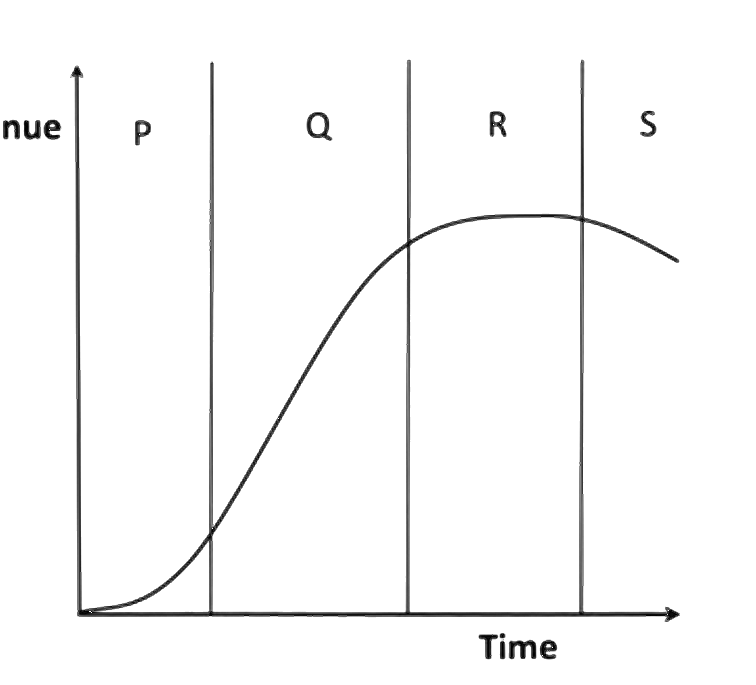
| Group I (Design aspect) | Group II (Description) |
|---|---|
| P. Form design | 1. Introduction, growth, maturity and decline |
| Q. Concurrent engineering | 2. Determines cost of each function of the design |
| R. Value analysis | 3. Integration of product design and manufacturing |
| S. Product life cycle | 4. Appearance, shape, colour and size of product |
Which one of the following is NOT associated with the process of new product development?
Which one of the following is modeled based on adaptation capabilities of biological systems?
An approach used in the product development which combines the efforts of design, manufacturing, and other functions to reduce the total time in introducing a new product in the market is

In a typical product development process under concurrent engineering approach, all elements of product life cycle from conception to disposal are considered at
| Process | Characteristic | ||
|---|---|---|---|
| P | Product synthesis | 1 | Process of conversion of conceptual design into engineering science based model |
| Q | Product simplification | 2 | Process related to design conceptualization |
| R | Product analysis | 3 | Process of maintaining uniformity and consistency |
| S | Product standardization | 4 | Process of reducing the number of parts without losing the functionalities |
| Configuration | Type of joints | ||
|---|---|---|---|
| P | Cartesian | 1 | One prismatic and two rotary |
| Q | Cylindrical | 2 | Three rotary |
| R | Spherical | 3 | Two prismatic and one rotary |
| S | Articulated | 4 | Three prismatic |
Showing 20 of 23 questions