My Cart
Your Cart 0

    Your cart is empty.

  • Total (Amount) ₹0.00
Previous year question hub

Spatial Transformations and Paper Folding - General Aptitude - General Aptitude (GA) Previous Year Questions

Practice Spatial Transformations and Paper Folding - General Aptitude - General Aptitude (GA) previous year questions organised from real papers, with year-wise coverage and clear topic navigation.

6Papers
6Years
7Questions
1Topics

Spatial Transformations and Paper Folding question pattern

Every graph below is calculated only from this selection.

Questions by year

Year-wise coverage for Spatial Transformations and Paper Folding. Each bar uses a separate theme-derived color.

Difficulty distribution

How the classified questions are distributed by difficulty.

Medium 5 71.4%
Easy 2 28.6%

Question type distribution

MCQ, numerical, multiple-select and other formats found in these papers.

MCQ 7 100%

Subject weightage

Top subjects by unique question coverage.

General Aptitude (GA)
7 Qs

Most asked topics

Top topics across the included previous year papers.

General Aptitude
7 Qs

Subtopic coverage

Top subtopics inside this exact selection.

Spatial Transformations and Paper Folding
7 Qs

Paper coverage

Question coverage for the most populated papers. Every active PYP paper remains listed below.

Physics (PH) 2026
1 Qs
Physics (PH) 2025
2 Qs
Physics (PH) 2024
1 Qs
Physics (PH) 2022
1 Qs
Physics (PH) 2021
1 Qs
Physics (PH) 2015
1 Qs

Included previous year papers

Newest papers appear first. Sort by year, question coverage or name.

PaperYear / sessionQuestions in this viewOpen
Physics (PH) 202620261View paper
Physics (PH) 202520252View paper
Physics (PH) 202420241View paper
Physics (PH) 202220221View paper
Physics (PH) 202120211View paper
Physics (PH) 201520151View paper

All Spatial Transformations and Paper Folding previous year questions

Practice every matching question in batches of 20, with every available option.

1
2015 · General Aptitude (GA) · General Aptitude · Spatial Transformations and Paper Folding
Physics (PH) 2015
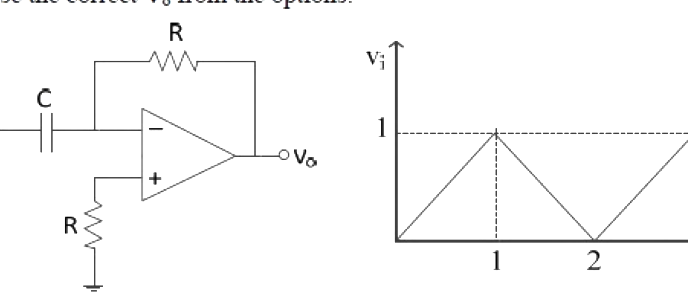
Consider the circuit shown in the figure, where RC = 1. For an input signal Vi shown below, choose the correct Vo from the options:

Question diagram

Open complete paper
2
2021 · General Aptitude (GA) · General Aptitude · Spatial Transformations and Paper Folding
Physics (PH) 2021

The mirror image of the above text about the x-axis is

Open complete paper
3
2022 · General Aptitude (GA) · General Aptitude · Spatial Transformations and Paper Folding
Physics (PH) 2022
Consider a cube made by folding a single sheet of paper of appropriate shape. The interior faces of the cube are all blank. However, the exterior faces that are not visible in the above view may not be blank.
Which one of the following represents a possible unfolding of the cube?
Open complete paper
4
2024 · General Aptitude (GA) · General Aptitude · Spatial Transformations and Paper Folding
Physics (PH) 2024
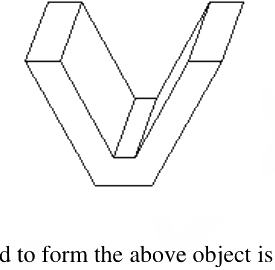
A planar rectangular paper has two V-shaped pieces attached as shown below. This piece of paper is folded to make the following closed three-dimensional object. The number of folds required to form the above object is

Question diagram

Open complete paper
5
2025 · General Aptitude (GA) · General Aptitude · Spatial Transformations and Paper Folding
Physics (PH) 2025

A thin wire is used to construct all the edges of a cube of 1 m side by bending, cutting and soldering the wire. If the wire is 12 m long, what is the minimum number of cuts required to construct the wire frame to form the cube?

Open complete paper
6
2025 · General Aptitude (GA) · General Aptitude · Spatial Transformations and Paper Folding
Physics (PH) 2025
The figures I, II and III are parts of a sequence. Which one of the following options comes next in the sequence at IV?
Open complete paper
7
2026 · General Aptitude (GA) · General Aptitude · Spatial Transformations and Paper Folding
Physics (PH) 2026
A paper shown in Panel I is folded along the dashed lines (- - -) to construct a cube. The shaded regions shown in Panel I appear on the outer surface of the cube. Referring to cubes shown in Panel II, which one of the options is correct?
Open complete paper