My Cart
Your Cart 0

    Your cart is empty.

  • Total (Amount) ₹0.00
Previous year question hub

Deductive and Inductive Reasoning - Logic - General Aptitude (GA) Previous Year Questions

Practice Deductive and Inductive Reasoning - Logic - General Aptitude (GA) previous year questions organised from real papers, with year-wise coverage and clear topic navigation.

4Papers
3Years
9Questions
1Topics

Deductive and Inductive Reasoning question pattern

Every graph below is calculated only from this selection.

Questions by year

Year-wise coverage for Deductive and Inductive Reasoning. Each bar uses a separate theme-derived color.

Difficulty distribution

How the classified questions are distributed by difficulty.

Medium 5 55.6%
Easy 4 44.4%

Question type distribution

MCQ, numerical, multiple-select and other formats found in these papers.

MCQ 9 100%

Subject weightage

Top subjects by unique question coverage.

General Aptitude (GA)
9 Qs

Most asked topics

Top topics across the included previous year papers.

Logic
9 Qs

Subtopic coverage

Top subtopics inside this exact selection.

Deductive and Inductive Reasoning
9 Qs

Paper coverage

Question coverage for the most populated papers. Every active PYP paper remains listed below.

Naval Architecture and Marine Engineering (NM) 2026
3 Qs
Mining Engineering (MN) 2026
2 Qs
Naval Architecture & Marine Engineering (NM) 2025
2 Qs
Naval Architecture & Marine Engineering (NM) 2022
2 Qs

Included previous year papers

Newest papers appear first. Sort by year, question coverage or name.

PaperYear / sessionQuestions in this viewOpen
Mining Engineering (MN) 202620262View paper
Naval Architecture and Marine Engineering (NM) 202620263View paper
Naval Architecture & Marine Engineering (NM) 202520252View paper
Naval Architecture & Marine Engineering (NM) 202220222View paper

All Deductive and Inductive Reasoning previous year questions

Practice every matching question in batches of 20, with every available option.

1
2022 · General Aptitude (GA) · Logic · Deductive and Inductive Reasoning
Naval Architecture & Marine Engineering (NM) 2022
Mosquitoes pose a threat to human health. Controlling mosquitoes using chemicals may have undesired consequences. In Florida, authorities have used genetically modified mosquitoes to control the overall mosquito population. It remains to be seen if this novel approach has unforeseen consequences.

Which one of the following is the correct logical inference based on the information in the above passage?
Open complete paper
2
2022 · General Aptitude (GA) · Logic · Deductive and Inductive Reasoning
Naval Architecture & Marine Engineering (NM) 2022

In a class of five students P, Q, R, S and T, only one student is known to have copied in the exam. The disciplinary committee has investigated the situation and recorded the statements from the students as given below.

Statement of P: R has copied in the exam.

Statement of Q: S has copied in the exam.

Statement of R: P did not copy in the exam.

Statement of S: Only one of us is telling the truth.

Statement of T: R is telling the truth.

The investigating team had authentic information that S never lies.

Based on the information given above, the person who has copied in the exam is

Open complete paper
3
2025 · General Aptitude (GA) · Logic · Deductive and Inductive Reasoning
Naval Architecture & Marine Engineering (NM) 2025
Based only on the conversation below, identify the logically correct inference:
“Even if I had known that you were in the hospital, I would not have gone there to see you”, Ramya told Josephine.
Open complete paper
4
2025 · General Aptitude (GA) · Logic · Deductive and Inductive Reasoning
Naval Architecture & Marine Engineering (NM) 2025
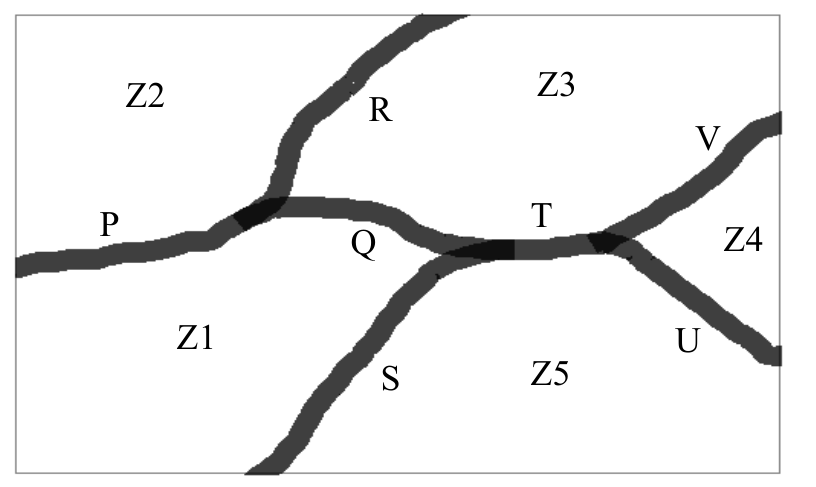
The diagram below shows a river system consisting of 7 segments, marked P, Q, R, S, T, U, and V. It splits the land into 5 zones, marked Z1, Z2, Z3, Z4, and Z5. We need to connect these zones using the least number of bridges. Out of the following options, which one is correct?
Note: The figure shown is representative.

Source question diagram

Open complete paper
5
2026 · General Aptitude (GA) · Logic · Deductive and Inductive Reasoning
Mining Engineering (MN) 2026
Consider an art gallery whose walkways are shown as lines in the diagram. A black dot represents a junction of two walkways. A guard may be placed at a junction to watch over the walkways that join at that junction. The minimum number of guards needed to watch all the walkways is ______.
Open complete paper
6
2026 · General Aptitude (GA) · Logic · Deductive and Inductive Reasoning
Mining Engineering (MN) 2026

Four people P, Q, R, and S, of different ages, make the following observations.
P – I am younger than S.
Q – I am neither the youngest nor the oldest.
R – P is older than me.
Based on these observations, the youngest person is ______.

Open complete paper
7
2026 · General Aptitude (GA) · Logic · Deductive and Inductive Reasoning
Naval Architecture and Marine Engineering (NM) 2026
'When it is raining, peacocks dance.'
Based only on this sentence, which one of the following options is necessarily true?
Open complete paper
8
2026 · General Aptitude (GA) · Logic · Deductive and Inductive Reasoning
Naval Architecture and Marine Engineering (NM) 2026
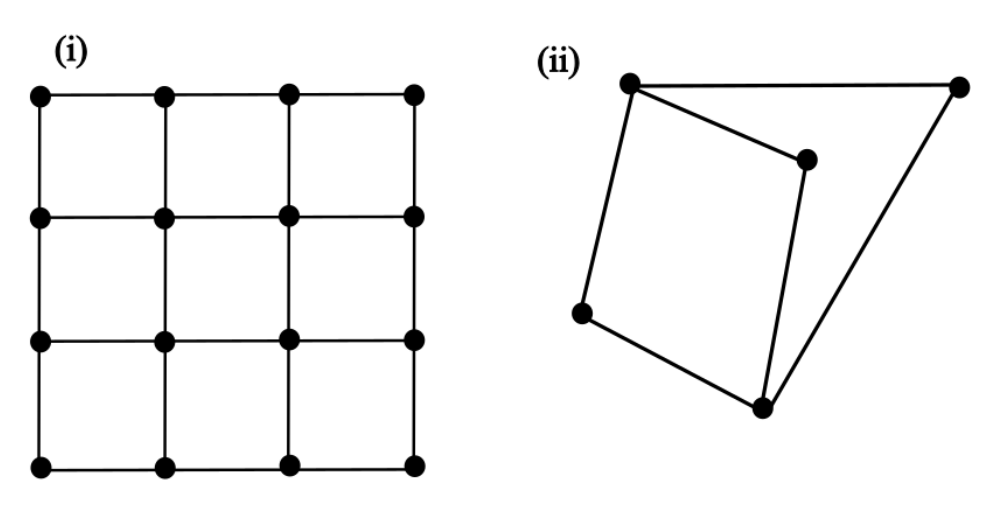
Figures (i) and (ii) represent intercity highway systems. The black dots represent cities and the line segments between them represent intercity highways.
A salesperson needs to make a trip. She needs to start from a city, visit each of the remaining cities exactly once, and finally return to the same city from which she started.
Which one of the following options is then true?

Question source image

Open complete paper
9
2026 · General Aptitude (GA) · Logic · Deductive and Inductive Reasoning
Naval Architecture and Marine Engineering (NM) 2026
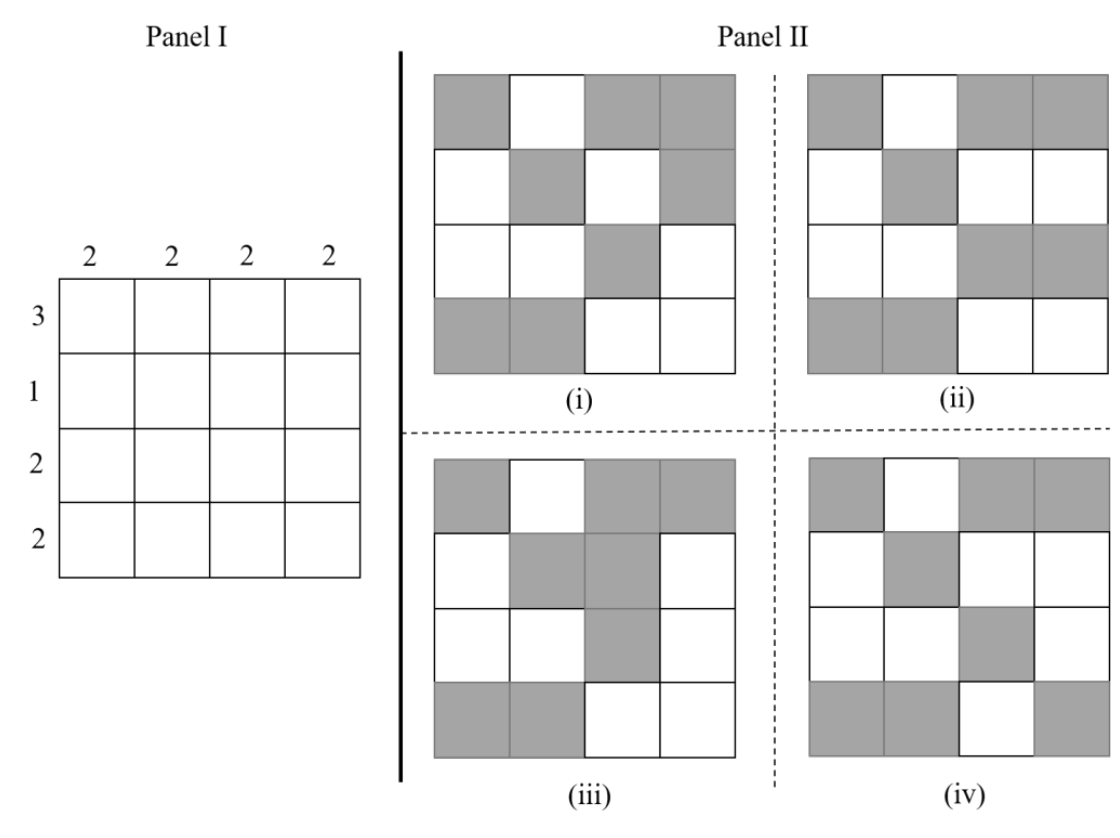
The figure in Panel I below is a grid of cells with four rows and four columns. The numbers on the top and on the left represent the number of cells that are to be shaded in that column and row, respectively. Which one of the options shown in Panel II below represents the grid shaded correctly?

Question source image

Open complete paper