Difficulty distribution
How the classified questions are distributed by difficulty.
Your cart is empty.
Practice Heat transfer - Transport Phenomena and Rate Processes - Metallurgical Engineering previous year questions organised from real papers, with year-wise coverage and clear topic navigation.
Every graph below is calculated only from this selection.
Year-wise coverage for Heat transfer. Each bar uses a separate theme-derived color.
How the classified questions are distributed by difficulty.
MCQ, numerical, multiple-select and other formats found in these papers.
Top subjects by unique question coverage.
Top topics across the included previous year papers.
Top subtopics inside this exact selection.
Question coverage for the most populated papers. Every active PYP paper remains listed below.
Newest papers appear first. Sort by year, question coverage or name.
| Paper | Year / session | Questions in this view | Open |
|---|---|---|---|
| Metallurgical Engineering (MT) 2026 | 2026 | 2 | View paper |
| Metallurgical Engineering (MT) 2025 | 2025 | 2 | View paper |
| Metallurgical Engineering (MT) 2024 | 2024 | 3 | View paper |
| Metallurgical Engineering (MT) 2023 | 2023 | 1 | View paper |
| Metallurgical Engineering (MT) 2022 | 2022 | 3 | View paper |
| Metallurgical Engineering (MT) 2021 | 2021 | 2 | View paper |
| Metallurgical Engineering (MT) 2020 | 2020 | 2 | View paper |
| Metallurgical Engineering (MT) 2019 | 2019 | 1 | View paper |
| Metallurgical Engineering (MT) 2018 | 2018 | 3 | View paper |
| Metallurgical Engineering (MT) 2017 | 2017 | 1 | View paper |
| Metallurgical Engineering (MT) 2014 | 2014 | 1 | View paper |
| Metallurgical Engineering (MT) 2013 | 2013 | 1 | View paper |
| Metallurgical Engineering (MT) 2012 | 2012 | 2 | View paper |
| Metallurgical Engineering (MT) 2011 | 2011 | 1 | View paper |
| Metallurgical Engineering (MT) 2010 | 2010 | 2 | View paper |
| Metallurgical Engineering (MT) 2009 | 2009 | 1 | View paper |
| Metallurgical Engineering (MT) 2007 | 2007 | 1 | View paper |
Practice every matching question in batches of 20, with every available option.
The dimension of thermal conductivity in terms of mass (M), length (L), time (T), and temperature (θ) is
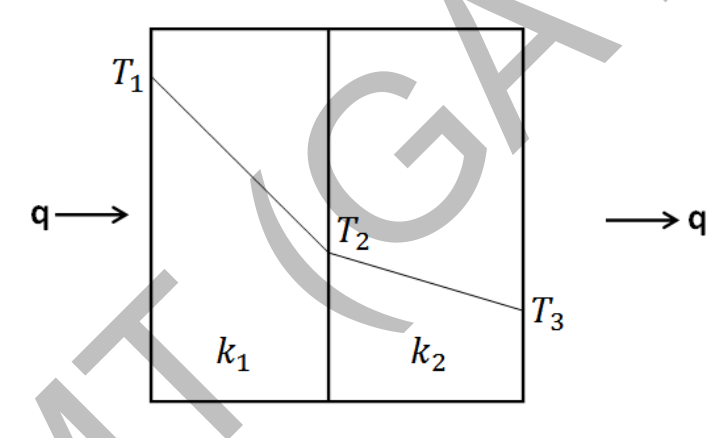
A furnace wall consists of four layers of different materials, M1, M2, M3 and M4. If the layers are of equal thickness and the steady state temperature profile is, as shown below, then the material with the lowest thermal conductivity is

At steady state and when the inner and outer walls of a long hollow cylinder are kept at two different temperatures, the unidirectional temperature variation along the thickness of the wall is
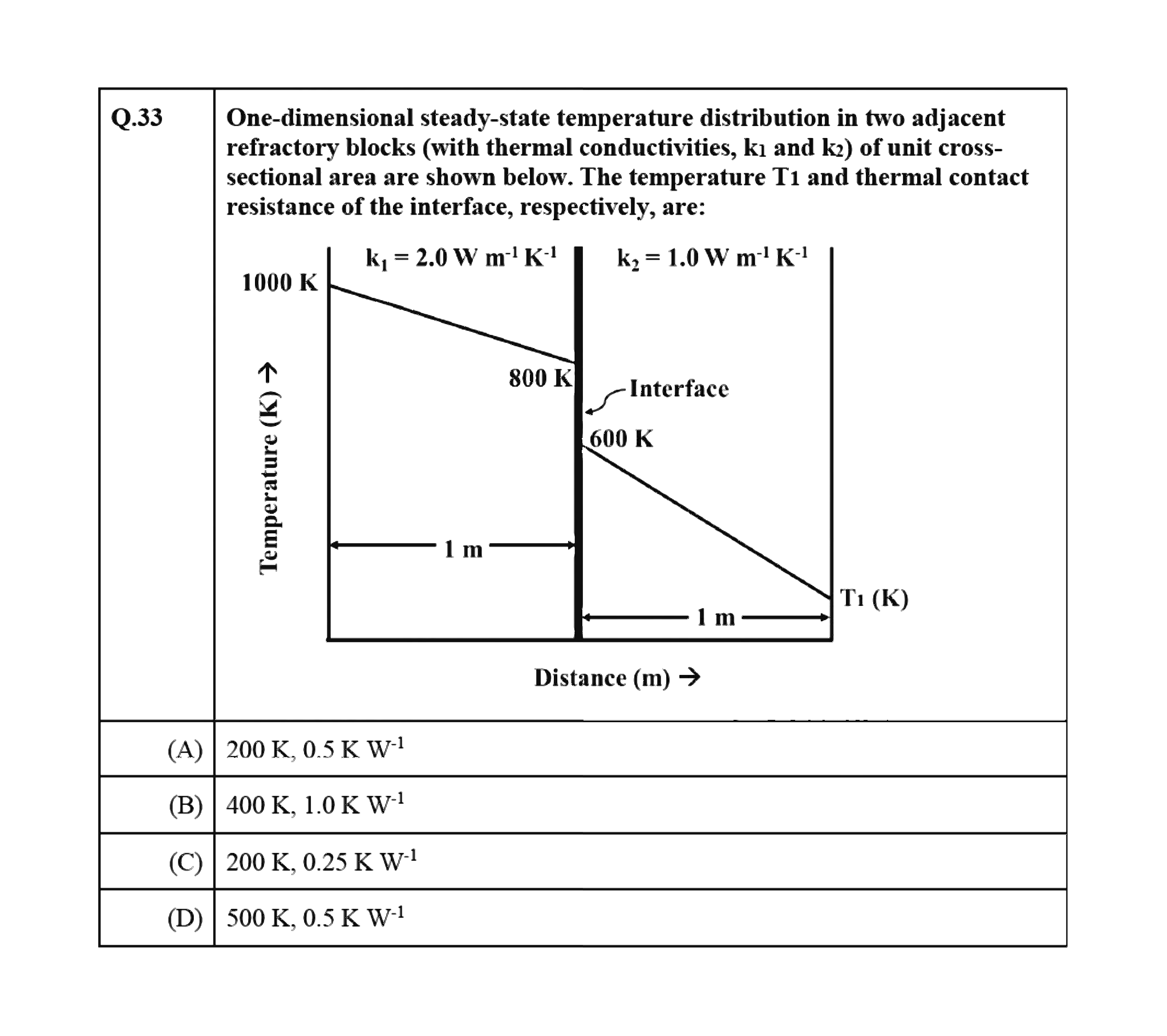
A furnace wall consists of two layers. The inside layer of 450 mm is made of light weight bricks of thermal conductivity 1 W/m.K and the outside layer of 900 mm is made of refractory of thermal conductivity 2 W/m.K. The hot face of the inside layer is at temperature 1300 K and the cold face of the outer layer is at 400 K. The temperature at the interface between the two layers is
Hot metal at 1700 K is poured in a sand mould that is open at the top. Heat loss from the liquid metal takes place by

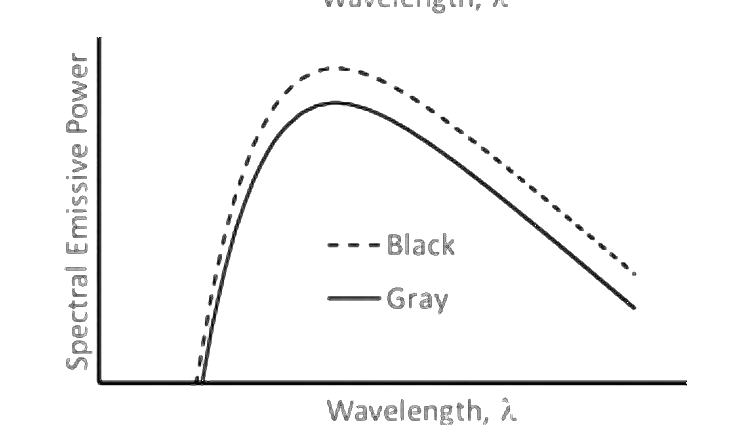
Select the correct spectra (shown on a log-log scale in the figures) for emission from a gray surface and a black body, both maintained at 1000 K.


Showing 20 of 29 questions