Difficulty distribution
How the classified questions are distributed by difficulty.
Your cart is empty.
Practice Basic Laws of Chemical Kinetics - Transport Phenomena and Rate Processes - Metallurgical Engineering previous year questions organised from real papers, with year-wise coverage and clear topic navigation.
Every graph below is calculated only from this selection.
Year-wise coverage for Basic Laws of Chemical Kinetics. Each bar uses a separate theme-derived color.
How the classified questions are distributed by difficulty.
MCQ, numerical, multiple-select and other formats found in these papers.
Top subjects by unique question coverage.
Top topics across the included previous year papers.
Top subtopics inside this exact selection.
Question coverage for the most populated papers. Every active PYP paper remains listed below.
Newest papers appear first. Sort by year, question coverage or name.
| Paper | Year / session | Questions in this view | Open |
|---|---|---|---|
| Metallurgical Engineering (MT) 2025 | 2025 | 1 | View paper |
| Metallurgical Engineering (MT) 2023 | 2023 | 1 | View paper |
| Metallurgical Engineering (MT) 2021 | 2021 | 2 | View paper |
| Metallurgical Engineering (MT) 2020 | 2020 | 1 | View paper |
| Metallurgical Engineering (MT) 2017 | 2017 | 1 | View paper |
| Metallurgical Engineering (MT) 2016 | 2016 | 1 | View paper |
| Metallurgical Engineering (MT) 2012 | 2012 | 1 | View paper |
| Metallurgical Engineering (MT) 2011 | 2011 | 2 | View paper |
| Metallurgical Engineering (MT) 2007 | 2007 | 1 | View paper |
Practice every matching question in batches of 20, with every available option.
The activation energy for a reaction is 100 kJ/mole. The approximate increase in temperature required for doubling the rate of reaction, from that at 25 °C, is
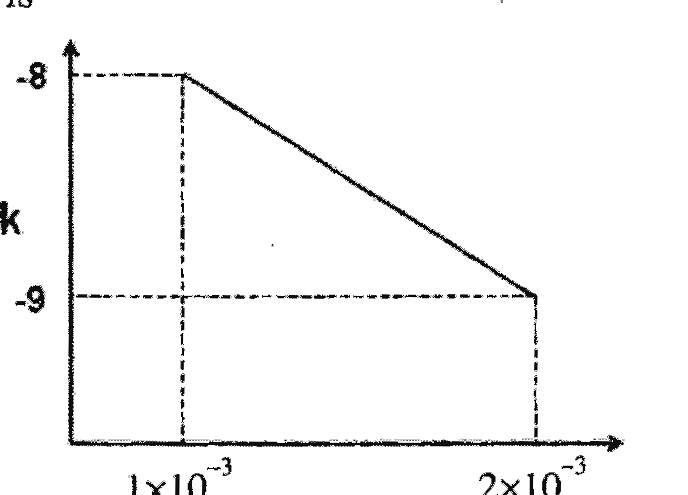
If k is the rate constant for a reaction and T is the absolute temperature in the given figure, the activation energy for the reaction is

Consider a reaction with activation energy of 8.314 kJ/mol that takes place at 300 K. If the reaction rate is to be tripled, the temperature of the reaction should be