Difficulty distribution
How the classified questions are distributed by difficulty.
Your cart is empty.
Practice Crystal Imperfections - Physical Metallurgy - Metallurgical Engineering previous year questions organised from real papers, with year-wise coverage and clear topic navigation.
Every graph below is calculated only from this selection.
Year-wise coverage for Crystal Imperfections. Each bar uses a separate theme-derived color.
How the classified questions are distributed by difficulty.
MCQ, numerical, multiple-select and other formats found in these papers.
Top subjects by unique question coverage.
Top topics across the included previous year papers.
Top subtopics inside this exact selection.
Question coverage for the most populated papers. Every active PYP paper remains listed below.
Newest papers appear first. Sort by year, question coverage or name.
| Paper | Year / session | Questions in this view | Open |
|---|---|---|---|
| Metallurgical Engineering (MT) 2026 | 2026 | 1 | View paper |
| Metallurgical Engineering (MT) 2025 | 2025 | 1 | View paper |
| Metallurgical Engineering (MT) 2024 | 2024 | 2 | View paper |
| Metallurgical Engineering (MT) 2023 | 2023 | 2 | View paper |
| Metallurgical Engineering (MT) 2022 | 2022 | 1 | View paper |
| Metallurgical Engineering (MT) 2021 | 2021 | 3 | View paper |
| Metallurgical Engineering (MT) 2020 | 2020 | 2 | View paper |
| Metallurgical Engineering (MT) 2018 | 2018 | 2 | View paper |
| Metallurgical Engineering (MT) 2017 | 2017 | 2 | View paper |
| Metallurgical Engineering (MT) 2014 | 2014 | 1 | View paper |
| Metallurgical Engineering (MT) 2013 | 2013 | 2 | View paper |
| Metallurgical Engineering (MT) 2012 | 2012 | 2 | View paper |
| Metallurgical Engineering (MT) 2011 | 2011 | 2 | View paper |
| Metallurgical Engineering (MT) 2009 | 2009 | 2 | View paper |
| Metallurgical Engineering (MT) 2008 | 2008 | 3 | View paper |
| Metallurgical Engineering (MT) 2007 | 2007 | 2 | View paper |
Practice every matching question in batches of 20, with every available option.
The equilibrium vacancy concentration in copper is 588 ppm at 1000°C and 134 ppm at 800°C. The molar enthalpy of vacancy formation is
In Cu-Al phase diagram, the solubility of Al in Cu at room temperature is about 10% and that of Cu in Al is less than 1%. The Hume-Rothery rule that justifies this difference is
As the concentration of point defects in a crystal increases, its configurational entropy


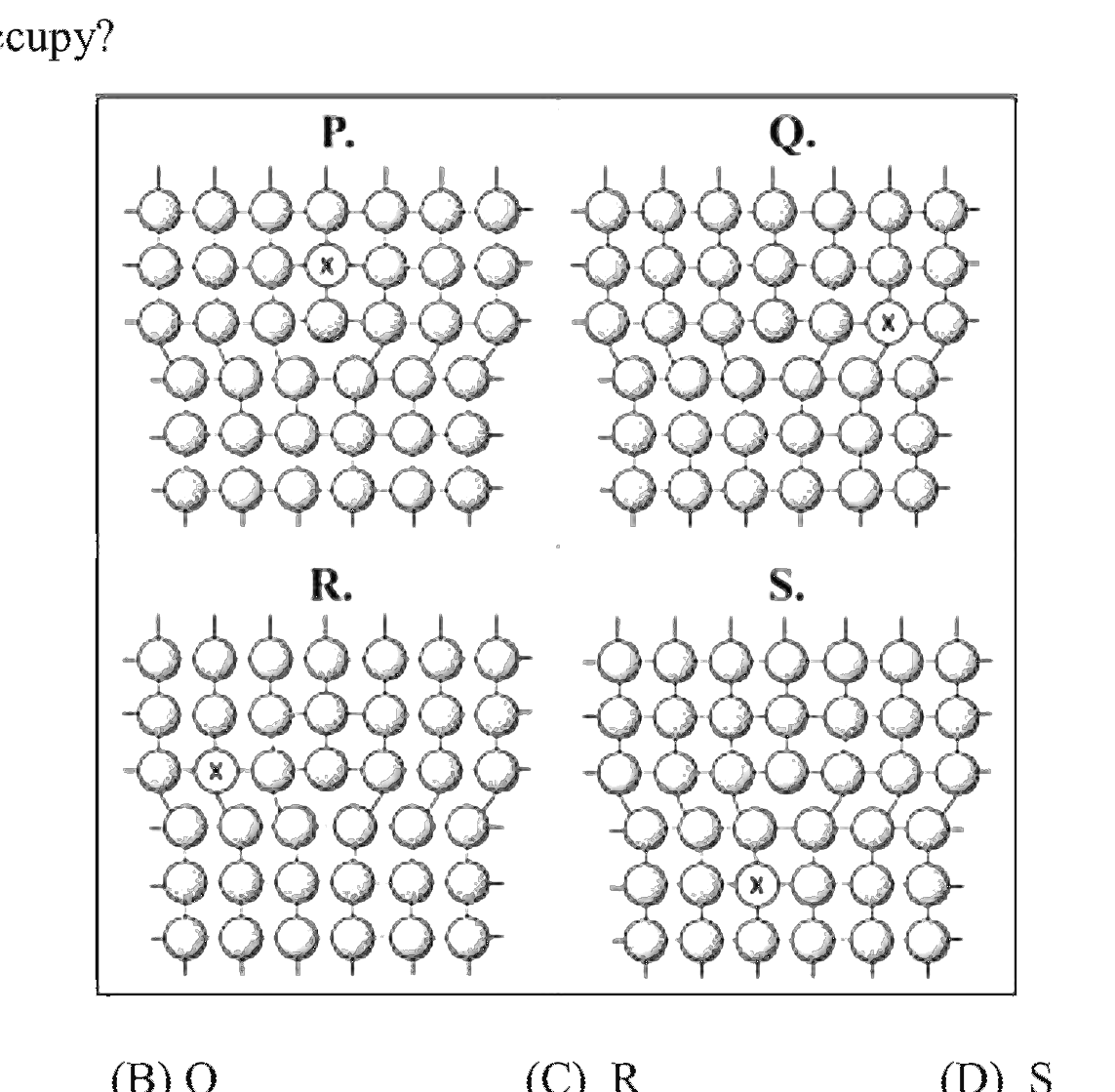
Consider a dilute substitutional solid solution of X in a metal A. The powder diffraction pattern of this alloy reveals that all the peaks have shifted to the left when compared to those for pure A (with no splitting of peaks). If such a solute interacts and segregates to an edge dislocation, which of the following positions around the dislocation will it preferentially occupy?

Showing 20 of 30 questions