My Cart
Your Cart 0

    Your cart is empty.

  • Total (Amount) ₹0.00
Previous year question hub

Mineral Beneficiation - Mineral Processing and Extractive Metallurgy - Metallurgical Engineering Previous Year Questions

Practice Mineral Beneficiation - Mineral Processing and Extractive Metallurgy - Metallurgical Engineering previous year questions organised from real papers, with year-wise coverage and clear topic navigation.

16Papers
16Years
37Questions
1Topics

Mineral Beneficiation question pattern

Every graph below is calculated only from this selection.

Questions by year

Year-wise coverage for Mineral Beneficiation. Each bar uses a separate theme-derived color.

Difficulty distribution

How the classified questions are distributed by difficulty.

Easy 32 86.5%
Medium 5 13.5%

Question type distribution

MCQ, numerical, multiple-select and other formats found in these papers.

MCQ 28 75.7%
Numerical Answer Type (NAT) 7 18.9%
Fill in the blanks 1 2.7%
MSQ 1 2.7%

Subject weightage

Top subjects by unique question coverage.

Metallurgical Engineering
37 Qs

Most asked topics

Top topics across the included previous year papers.

Mineral Processing and Extractive Metallurgy
37 Qs

Subtopic coverage

Top subtopics inside this exact selection.

Mineral Beneficiation
37 Qs

Paper coverage

Question coverage for the most populated papers. Every active PYP paper remains listed below.

Metallurgical Engineering (MT) 2026
1 Qs
Metallurgical Engineering (MT) 2025
2 Qs
Metallurgical Engineering (MT) 2024
3 Qs
Metallurgical Engineering (MT) 2023
4 Qs
Metallurgical Engineering (MT) 2022
2 Qs
Metallurgical Engineering (MT) 2020
1 Qs
Metallurgical Engineering (MT) 2019
2 Qs
Metallurgical Engineering (MT) 2018
1 Qs
Metallurgical Engineering (MT) 2017
1 Qs
Metallurgical Engineering (MT) 2016
1 Qs
Metallurgical Engineering (MT) 2014
1 Qs
Metallurgical Engineering (MT) 2013
4 Qs
Metallurgical Engineering (MT) 2012
2 Qs
Metallurgical Engineering (MT) 2011
2 Qs
Metallurgical Engineering (MT) 2008
4 Qs
Metallurgical Engineering (MT) 2007
6 Qs

Included previous year papers

Newest papers appear first. Sort by year, question coverage or name.

PaperYear / sessionQuestions in this viewOpen
Metallurgical Engineering (MT) 202620261View paper
Metallurgical Engineering (MT) 202520252View paper
Metallurgical Engineering (MT) 202420243View paper
Metallurgical Engineering (MT) 202320234View paper
Metallurgical Engineering (MT) 202220222View paper
Metallurgical Engineering (MT) 202020201View paper
Metallurgical Engineering (MT) 201920192View paper
Metallurgical Engineering (MT) 201820181View paper
Metallurgical Engineering (MT) 201720171View paper
Metallurgical Engineering (MT) 201620161View paper
Metallurgical Engineering (MT) 201420141View paper
Metallurgical Engineering (MT) 201320134View paper
Metallurgical Engineering (MT) 201220122View paper
Metallurgical Engineering (MT) 201120112View paper
Metallurgical Engineering (MT) 200820084View paper
Metallurgical Engineering (MT) 200720076View paper

All Mineral Beneficiation previous year questions

Practice every matching question in batches of 20, with every available option.

1
2007 · Metallurgical Engineering · Mineral Processing and Extractive Metallurgy · Mineral Beneficiation
Metallurgical Engineering (MT) 2007

Cyclones are primarily used for

Open complete paper
2
2007 · Metallurgical Engineering · Mineral Processing and Extractive Metallurgy · Mineral Beneficiation
Metallurgical Engineering (MT) 2007

A typical collector used in sulphide mineral flotation is

Open complete paper
3
2007 · Metallurgical Engineering · Mineral Processing and Extractive Metallurgy · Mineral Beneficiation
Metallurgical Engineering (MT) 2007
The settling velocity of a 0.5 micron diameter particle (density = 4900 kg m⁻³) in water (density = 1000 kg m⁻³) under laminar flow conditions is [Given: viscosity of water = 1 centipoise]
Open complete paper
4
2007 · Metallurgical Engineering · Mineral Processing and Extractive Metallurgy · Mineral Beneficiation
Metallurgical Engineering (MT) 2007

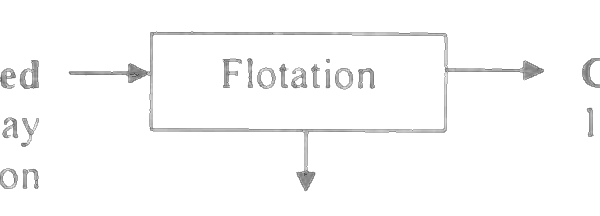
The recovery of gold in the following operation is

Open complete paper
5
2007 · Metallurgical Engineering · Mineral Processing and Extractive Metallurgy · Mineral Beneficiation
Metallurgical Engineering (MT) 2007
What is the volume % solids in a pulp containing 65 wt % solids? Average specific gravity of solids is 2.70
Open complete paper
6
2007 · Metallurgical Engineering · Mineral Processing and Extractive Metallurgy · Mineral Beneficiation
Metallurgical Engineering (MT) 2007

Identify the incorrect statement with reference to unit processes in extractive metallurgy.

Open complete paper
7
2008 · Metallurgical Engineering · Mineral Processing and Extractive Metallurgy · Mineral Beneficiation
Metallurgical Engineering (MT) 2008

Cassiterite is an important source for

Open complete paper
8
2008 · Metallurgical Engineering · Mineral Processing and Extractive Metallurgy · Mineral Beneficiation
Metallurgical Engineering (MT) 2008

The velocity at which particles from a fluidized bed are carried away by the fluid passing through it, is known as

Open complete paper
9
2008 · Metallurgical Engineering · Mineral Processing and Extractive Metallurgy · Mineral Beneficiation
Metallurgical Engineering (MT) 2008

A flotation plant treats 100 tons of chalcopyrite containing 2% Cu and produces 6 tons of concentrate. The concentrate has 25% Cu. The percentage Cu in the tailings is

Open complete paper
10
2008 · Metallurgical Engineering · Mineral Processing and Extractive Metallurgy · Mineral Beneficiation
Metallurgical Engineering (MT) 2008
Given the following assertion 'a' and the reason 'r', the correct option is
Assertion a: In Bayer's process high pressure is used to dissolve alumina from bauxite
Reason r: Pressure increases the boiling point of water
Open complete paper
11
2011 · Metallurgical Engineering · Mineral Processing and Extractive Metallurgy · Mineral Beneficiation
Metallurgical Engineering (MT) 2011

In froth flotation, collector refers to a reagent which primarily

Open complete paper
12
2011 · Metallurgical Engineering · Mineral Processing and Extractive Metallurgy · Mineral Beneficiation
Metallurgical Engineering (MT) 2011

Match the metals in Group I with the corresponding ores in Group II.

Group IGroup II
P. Lead1. Columbite
Q. Zinc2. Cassiterite
R. Uranium3. Galena
S. Niobium4. Pitchblende
5. Sphalerite
Open complete paper
13
2012 · Metallurgical Engineering · Mineral Processing and Extractive Metallurgy · Mineral Beneficiation
Metallurgical Engineering (MT) 2012

Floatation beneficiation is based on the principle of

Open complete paper
14
2012 · Metallurgical Engineering · Mineral Processing and Extractive Metallurgy · Mineral Beneficiation
Metallurgical Engineering (MT) 2012

Which one is NOT an agglomeration process?

Open complete paper
15
2013 · Metallurgical Engineering · Mineral Processing and Extractive Metallurgy · Mineral Beneficiation
Metallurgical Engineering (MT) 2013
In a roasting process, the set of conditions that favour sulphate formation from metal sulphide concentrates are
P. high temperature
Q. high partial pressure of oxygen
R. use of excess air
S. high partial pressure of \( SO_3 \)
Open complete paper
16
2013 · Metallurgical Engineering · Mineral Processing and Extractive Metallurgy · Mineral Beneficiation
Metallurgical Engineering (MT) 2013
Match the metal in Group I with its corresponding ore in Group II
Group IGroup II
(P) Ni(1) Monazite
(Q) Th(2) Cassiterite
(R) Pb(3) Penlandite
(S) Sn(4) Galena
Open complete paper
17
2013 · Metallurgical Engineering · Mineral Processing and Extractive Metallurgy · Mineral Beneficiation
Metallurgical Engineering (MT) 2013

Match the unit operation in Group I with its corresponding principle in Group II:

Group IGroup II
(P) Jigging(1) Modification of surface tension
(Q) Tabling(2) Difference in density
(R) Heavy media separation(3) Differential initial acceleration
(S) Flotation(4) Differential lateral movement
Open complete paper
18
2013 · Metallurgical Engineering · Mineral Processing and Extractive Metallurgy · Mineral Beneficiation
Metallurgical Engineering (MT) 2013
The aperture size (in μm) of a 200 mesh sieve having a wire diameter of 53 μm is __________
Open complete paper
19
2014 · Metallurgical Engineering · Mineral Processing and Extractive Metallurgy · Mineral Beneficiation
Metallurgical Engineering (MT) 2014

Which one of the following minerals is a source of titanium?

Open complete paper
20
2016 · Metallurgical Engineering · Mineral Processing and Extractive Metallurgy · Mineral Beneficiation
Metallurgical Engineering (MT) 2016

Match the entities in Column I with the corresponding processes in Column II.

Column IColumn II
[P] Xanthate salts[1] Extraction of Al
[Q] Thiobacillus Ferrooxidans[2] Flotation
[R] Hydrocyclone[3] Classification
[S] Anode effect[4] Bacterial Leaching
Open complete paper

Showing 20 of 37 questions