My Cart
Your Cart 0

    Your cart is empty.

  • Total (Amount) ₹0.00
Previous year question hub

Water Relations and Mineral Transport - Plant Physiology and Biochemistry - Life Sciences Previous Year Questions

Practice Water Relations and Mineral Transport - Plant Physiology and Biochemistry - Life Sciences previous year questions organised from real papers, with year-wise coverage and clear topic navigation.

5Papers
5Years
9Questions
1Topics

Water Relations and Mineral Transport question pattern

Every graph below is calculated only from this selection.

Questions by year

Year-wise coverage for Water Relations and Mineral Transport. Each bar uses a separate theme-derived color.

Difficulty distribution

How the classified questions are distributed by difficulty.

Medium 5 55.6%
Easy 4 44.4%

Question type distribution

MCQ, numerical, multiple-select and other formats found in these papers.

MCQ 9 100%

Subject weightage

Top subjects by unique question coverage.

Life Sciences
9 Qs

Most asked topics

Top topics across the included previous year papers.

Plant Physiology and Biochemistry
9 Qs

Subtopic coverage

Top subtopics inside this exact selection.

Water Relations and Mineral Transport
9 Qs

Paper coverage

Question coverage for the most populated papers. Every active PYP paper remains listed below.

Life Sciences (XL) 2023
1 Qs
Life Sciences (XL) 2019
1 Qs
Life Sciences (XL) 2017
1 Qs
Life Sciences (XL) 2016
5 Qs
Life Sciences (XL) 2013
1 Qs

Included previous year papers

Newest papers appear first. Sort by year, question coverage or name.

PaperYear / sessionQuestions in this viewOpen
Life Sciences (XL) 202320231View paper
Life Sciences (XL) 201920191View paper
Life Sciences (XL) 201720171View paper
Life Sciences (XL) 201620165View paper
Life Sciences (XL) 201320131View paper

All Water Relations and Mineral Transport previous year questions

Practice every matching question in batches of 20, with every available option.

1
2013 · Life Sciences · Plant Physiology and Biochemistry · Water Relations and Mineral Transport
Life Sciences (XL) 2013
Identify two CORRECT statements from the following which are related to the ion transportation in the root system of plant
P. The proton pumps and H⁺-pyrophosphatase appear to work in anti-parallel with the vacuolar ATPase to create a proton gradient across the tonoplast
Q. Calcium is one of the important ion whose concentration is strongly regulated by the concentration of apoplastic spaces in the millimolar level
R. Solute move through both apoplast and symplast, and xylem parenchyma cells participate in xylem loading
S. The limitation of Nerst equation for relating the membrane potential to the distribution of ion at equilibrium is that it cannot distinguish between active and passive transport
Open complete paper
2
2016 · Life Sciences · Plant Physiology and Biochemistry · Water Relations and Mineral Transport
Life Sciences (XL) 2016
The uptake of nitrogen (N) and phosphorus (P) by plant roots often involves interaction between root and some symbiotic organisms. Which of the following associations is most commonly found for the uptake of these two nutrients?
Open complete paper
3
2016 · Life Sciences · Plant Physiology and Biochemistry · Water Relations and Mineral Transport
Life Sciences (XL) 2016
Which of the following summarizes the role of Casparian strip in transport of water in the root?
Open complete paper
4
2016 · Life Sciences · Plant Physiology and Biochemistry · Water Relations and Mineral Transport
Life Sciences (XL) 2016

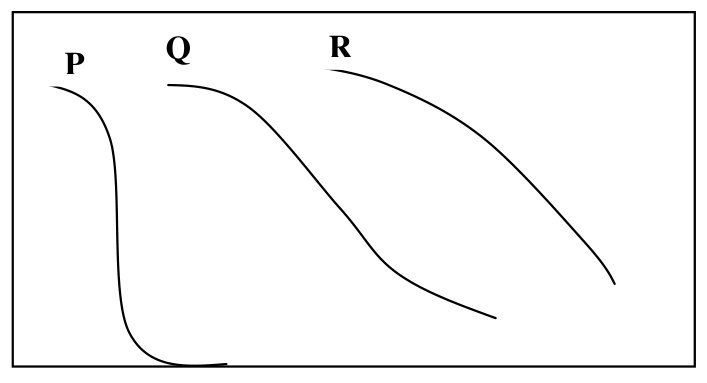
The three plots P, Q and R (in different units) in the graph below represent the dependence of photosynthesis rate (PR), leaf expansion rate (LER) and translocation rate of assimilates (TR) in a plant on leaf water potential. Which of the following statements is correct in this regard?

Source question diagram

Open complete paper
5
2016 · Life Sciences · Plant Physiology and Biochemistry · Water Relations and Mineral Transport
Life Sciences (XL) 2016

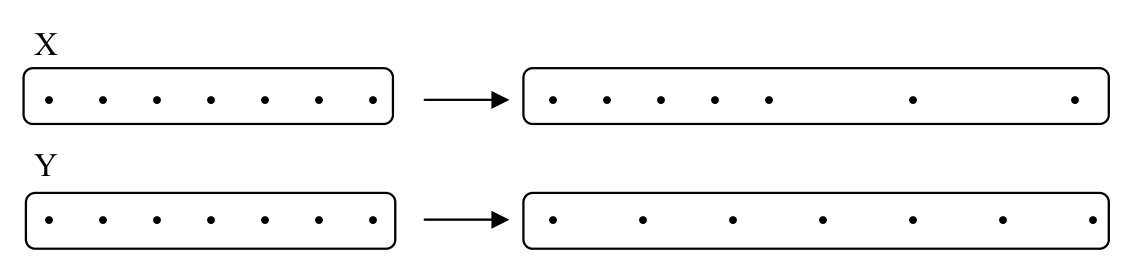
The cell surface expands differently in different plant cells. Two common modes of expansion are shown below (X and Y). Each rectangular box represents a cell marked with dots on its surface. The spacing between the dots changes after the cell has undergone expansion as indicated by the arrow. Which of the following statements is correct with respect to the growth of root hair and pollen tube?

Source question diagram

Open complete paper
6
2016 · Life Sciences · Plant Physiology and Biochemistry · Water Relations and Mineral Transport
Life Sciences (XL) 2016

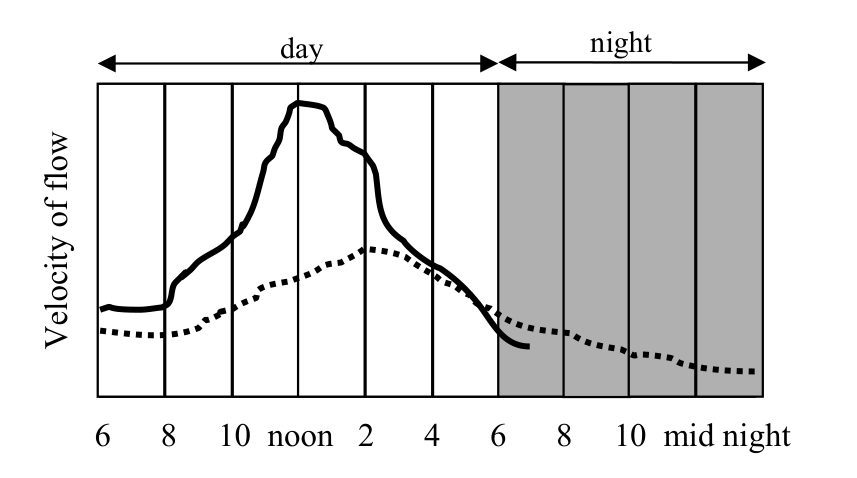
The continuous and dashed lines in the following graph represent the velocity of sap flow in two different parts of a plant at different times of a day. Which of the following statements is most appropriate based on this graph?

Source question diagram

Open complete paper
7
2017 · Life Sciences · Plant Physiology and Biochemistry · Water Relations and Mineral Transport
Life Sciences (XL) 2017
Two plant cells M and N are lying side by side making direct contact. “M” has osmotic potential (Ψs) of -10 bar and pressure potential (Ψp) of 4 bar. On the other hand, “N” has osmotic potential (Ψs) of -12 bar and pressure potential (Ψp) of 5 bar.
Based on these data, what would be the direction of movement of water between M and N?
Open complete paper
8
2019 · Life Sciences · Plant Physiology and Biochemistry · Water Relations and Mineral Transport
Life Sciences (XL) 2019
Glyphosate is a broad spectrum herbicide. Upon application to leaves, it is translocated to meristematic areas and underground rhizomes by
Open complete paper
9
2023 · Life Sciences · Plant Physiology and Biochemistry · Water Relations and Mineral Transport
Life Sciences (XL) 2023

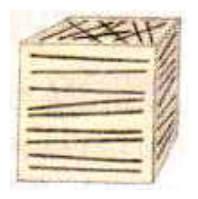
The schematic depicts an unexpanded plant cell within a hypocotyl with the arrangement of cellulose microfibrils marked on its cell wall. Which one of the following shapes would most likely result from the expansion of this cell if the pattern of the cellulose fibrils does not change?

Source question diagram

Open complete paper