My Cart
Your Cart 0

    Your cart is empty.

  • Total (Amount) ₹0.00
Previous year question hub

Gene Transfer and Genome Editing - Plant Breeding, Genetic Modification, Genome Editing - Life Sciences Previous Year Questions

Practice Gene Transfer and Genome Editing - Plant Breeding, Genetic Modification, Genome Editing - Life Sciences previous year questions organised from real papers, with year-wise coverage and clear topic navigation.

15Papers
15Years
25Questions
1Topics

Gene Transfer and Genome Editing question pattern

Every graph below is calculated only from this selection.

Questions by year

Year-wise coverage for Gene Transfer and Genome Editing. Each bar uses a separate theme-derived color.

Difficulty distribution

How the classified questions are distributed by difficulty.

Medium 19 76%
Easy 6 24%

Question type distribution

MCQ, numerical, multiple-select and other formats found in these papers.

MCQ 22 88%
MSQ 3 12%

Subject weightage

Top subjects by unique question coverage.

Life Sciences
25 Qs

Most asked topics

Top topics across the included previous year papers.

Plant Breeding, Genetic Modification, Genome Editing
25 Qs

Subtopic coverage

Top subtopics inside this exact selection.

Gene Transfer and Genome Editing
25 Qs

Paper coverage

Question coverage for the most populated papers. Every active PYP paper remains listed below.

Life Sciences (XL) 2026
1 Qs
Life Sciences (XL) 2025
1 Qs
Life Sciences (XL) 2024
2 Qs
Life Sciences (XL) 2021
3 Qs
Life Sciences (XL) 2020
2 Qs
Life Sciences (XL) 2018
1 Qs
Life Sciences (XL) 2017
1 Qs
Life Sciences (XL) 2016
1 Qs
Life Sciences (XL) 2015
1 Qs
Life Sciences (XL) 2013
1 Qs
Life Sciences (XL) 2012
1 Qs
Life Sciences (XL) 2011
2 Qs
Life Sciences (XL) 2009
4 Qs
Life Sciences (XL) 2008
3 Qs
Life Sciences (XL) 2007
1 Qs

Included previous year papers

Newest papers appear first. Sort by year, question coverage or name.

PaperYear / sessionQuestions in this viewOpen
Life Sciences (XL) 202620261View paper
Life Sciences (XL) 202520251View paper
Life Sciences (XL) 202420242View paper
Life Sciences (XL) 202120213View paper
Life Sciences (XL) 202020202View paper
Life Sciences (XL) 201820181View paper
Life Sciences (XL) 201720171View paper
Life Sciences (XL) 201620161View paper
Life Sciences (XL) 201520151View paper
Life Sciences (XL) 201320131View paper
Life Sciences (XL) 201220121View paper
Life Sciences (XL) 201120112View paper
Life Sciences (XL) 200920094View paper
Life Sciences (XL) 200820083View paper
Life Sciences (XL) 200720071View paper

All Gene Transfer and Genome Editing previous year questions

Practice every matching question in batches of 20, with every available option.

1
2007 · Life Sciences · Plant Breeding, Genetic Modification, Genome Editing · Gene Transfer and Genome Editing
Life Sciences (XL) 2007

Gene transfer method: Choose the correct answer.

Open complete paper
2
2008 · Life Sciences · Plant Breeding, Genetic Modification, Genome Editing · Gene Transfer and Genome Editing
Life Sciences (XL) 2008
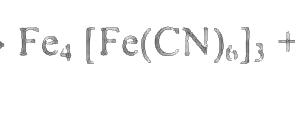
Group I: P: [diagram of plasmid with P, G, T], Q: [diagram of tissue cross-section], R: [diagram of cell with needle], S: Fe3+ + K4[Fe(CN)6] → Fe4[Fe(CN)6]3 + 4K+
Group II: 1. Kranz anatomy, 2. Single protoplast culture, 3. Binary vector, 4. Microinjection, 5. Partial plasmid map, 6. Ferric-Ferro-Cyanide complex
Open complete paper
3
2008 · Life Sciences · Plant Breeding, Genetic Modification, Genome Editing · Gene Transfer and Genome Editing
Life Sciences (XL) 2008
Group-I: P: Insect Resistance Rice, Q: Non-antibiotic selection system, R: Antibiotic marker gene, S: C4 photosynthesis
Group-II: 1. psy, 2. cry1Ab, 3. hpt, 4. PEPC, 5. PMI, 6. Rubisco
Open complete paper
4
2008 · Life Sciences · Plant Breeding, Genetic Modification, Genome Editing · Gene Transfer and Genome Editing
Life Sciences (XL) 2008
Group-I: P: IPR, Q: Selectable reporter gene, R: Vectorless DNA transfer, S: Selectable marker gene
Group-II: 1. Intellectual property rights, 2. International plant registration, 3. Protoplast system, 4. Agrobacterium system, 5. Neomycin phosphotransferase, 6. Green fluorescent protein
Open complete paper
5
2009 · Life Sciences · Plant Breeding, Genetic Modification, Genome Editing · Gene Transfer and Genome Editing
Life Sciences (XL) 2009

Virus resistant transgenic plants can be developed by the expression of

Open complete paper
6
2009 · Life Sciences · Plant Breeding, Genetic Modification, Genome Editing · Gene Transfer and Genome Editing
Life Sciences (XL) 2009
Which of the following statements are true about glyphosate tolerant transgenic plants ?
P. Transgenic plants detoxify glyphosate.
Q. Transgenic plants produce an altered enzyme that is not affected by glyphosate.
R. Transgenic plants sequester glyphosate in vacuoles.
S. Transgenic plants overcome the inhibition of aromatic amino acid biosynthesis.
Open complete paper
7
2009 · Life Sciences · Plant Breeding, Genetic Modification, Genome Editing · Gene Transfer and Genome Editing
Life Sciences (XL) 2009
Match the items in Group 1 with their functions in Group 2 :
Group 1Group 2
P. rol genes1. Food and energy source
Q. Opines2. Tumor formation
R. Virulence genes3. Hairy root induction
S. Aux and cyt genes4. T-DNA transfer and integration
Open complete paper
8
2009 · Life Sciences · Plant Breeding, Genetic Modification, Genome Editing · Gene Transfer and Genome Editing
Life Sciences (XL) 2009
Identify the INCORRECT statement :
Open complete paper
9
2011 · Life Sciences · Plant Breeding, Genetic Modification, Genome Editing · Gene Transfer and Genome Editing
Life Sciences (XL) 2011
Which of the following statements are TRUE on DNA delivery methods during plant transformation? P. Single stranded nicks are made in T-DNA border repeat by the VirD1, VirD2 and VirD3 protein complex Q. virA gene products form the export apparatus on the membrane for the transfer of T-DNA R. Gold/Tungsten particles are used as microprojectiles in biolistic method S. Acceleration of DNA-coated microprojectiles is carried out with compressed CO₂
Open complete paper
10
2011 · Life Sciences · Plant Breeding, Genetic Modification, Genome Editing · Gene Transfer and Genome Editing
Life Sciences (XL) 2011
Match the gene of interest for various aspects of crop improvement
Open complete paper
11
2012 · Life Sciences · Plant Breeding, Genetic Modification, Genome Editing · Gene Transfer and Genome Editing
Life Sciences (XL) 2012
Which of the following statements are TRUE on transgene approach?
P. T-DNA integration occurs mainly through non-homologous recombination
Q. The Gateway cloning depends on recombination technology as opposed to standard uses of restriction enzymes and DNA ligase
R. The localization of β-glucuronidase (GUS) activity as a result of expression of GUS reporter gene can be visualized in a histochemical assay using the X-gal
S. The green fluorescent protein gene (GFP) is isolated from the bacterium Photinus pyralis
Open complete paper
12
2013 · Life Sciences · Plant Breeding, Genetic Modification, Genome Editing · Gene Transfer and Genome Editing
Life Sciences (XL) 2013
For successful transfer of a foreign gene from the engineered Ti-plasmid to the plant genome, few cis-acting DNA elements and trans-acting protein factors are very much essential. Select the CORRECT combination from the following
Open complete paper
13
2015 · Life Sciences · Plant Breeding, Genetic Modification, Genome Editing · Gene Transfer and Genome Editing
Life Sciences (XL) 2015
Identify the INCORRECT statements with respect to plastid transformation.
P. Antibiotic used for selection of trasplastomic plant is spectinomycin
Q. Chances of gene escape from transplastomic plants are high
R. Microprojectile bombardment is the method of DNA delivery
S. Levels of transgene expression are low
Open complete paper
14
2016 · Life Sciences · Plant Breeding, Genetic Modification, Genome Editing · Gene Transfer and Genome Editing
Life Sciences (XL) 2016
Given below are the names of some genes/enzymes and their uses in genetically modified crops. Match the two columns.
Gene/enzymeCommercial use
P. Bt genei. Golden rice
Q. β-carotene biosynthetic genesii. insect resistance
R. ACC deaminaseiii. herbicide resistance
S. EPSP synthaseiv. fruit ripening
Open complete paper
15
2017 · Life Sciences · Plant Breeding, Genetic Modification, Genome Editing · Gene Transfer and Genome Editing
Life Sciences (XL) 2017
Choose the CORRECT set of matches between group I and group II in relation to plant genetic transformation methods.
GROUP I
P. Helium
Q. Acetosyringone
R. Polyethylene glycol
S. Agarose embedding
GROUP II
1. Agrobacterium tumefaciens
2. Microinjection
3. Particle bombardment
4. Protoplast
Open complete paper
16
2018 · Life Sciences · Plant Breeding, Genetic Modification, Genome Editing · Gene Transfer and Genome Editing
Life Sciences (XL) 2018
You are asked to design a genetic construct for high-level expression of a gene encoding the therapeutic protein 18 (TP18) via plastid transformation. Select the CORRECT set of genetic elements for this construct.
Open complete paper
17
2020 · Life Sciences · Plant Breeding, Genetic Modification, Genome Editing · Gene Transfer and Genome Editing
Life Sciences (XL) 2020
In relation to Agrobacterium mediated genetic engineering in plants, match the following in CORRECT combination

Gene nameFunction
P. virAi. Acetosyringone receptor
Q. virBii. Conjugal tube formation
R. virD1iii. Topoisomerase
S. virGiv. Inducer of all vir operons
v. Octopine synthesis
Open complete paper
18
2020 · Life Sciences · Plant Breeding, Genetic Modification, Genome Editing · Gene Transfer and Genome Editing
Life Sciences (XL) 2020
Selection markers and the corresponding genes used in plant genetic engineering are given below

Selection Marker      Gene
P. Kanamycin                        i. hptII
Q. Hygromycin                       ii. bar
R. Bialaphos                         iii. pmi
S. Mannose                           iv. nptII

Choose the CORRECT combination
Open complete paper
19
2021 · Life Sciences · Plant Breeding, Genetic Modification, Genome Editing · Gene Transfer and Genome Editing
Life Sciences (XL) 2021
Which of the following enzyme(s), when overexpressed, would result in rice grains with increased β-carotene content?
Open complete paper
20
2021 · Life Sciences · Plant Breeding, Genetic Modification, Genome Editing · Gene Transfer and Genome Editing
Life Sciences (XL) 2021
Match the genetically modified crop in GROUP I with the corresponding genetic element in GROUP II.

GROUP I
P. Tomato with delayed fruit ripening
Q. Herbicide-resistant soybean
R. Insect-resistant cotton
S. Soybean with modified oil content

GROUP II
1. EPSP synthase
2. Δ12-Desaturase
3. Polygalacturonase
4. Bt-Cry protein
Open complete paper

Showing 20 of 25 questions