Difficulty distribution
How the classified questions are distributed by difficulty.
Your cart is empty.
Practice Gene Regulation and Microbial Genomes - Microbial Genetics - Life Sciences previous year questions organised from real papers, with year-wise coverage and clear topic navigation.
Every graph below is calculated only from this selection.
Year-wise coverage for Gene Regulation and Microbial Genomes. Each bar uses a separate theme-derived color.
How the classified questions are distributed by difficulty.
MCQ, numerical, multiple-select and other formats found in these papers.
Top subjects by unique question coverage.
Top topics across the included previous year papers.
Top subtopics inside this exact selection.
Question coverage for the most populated papers. Every active PYP paper remains listed below.
Newest papers appear first. Sort by year, question coverage or name.
| Paper | Year / session | Questions in this view | Open |
|---|---|---|---|
| Life Sciences (XL) 2026 | 2026 | 1 | View paper |
| Life Sciences (XL) 2025 | 2025 | 2 | View paper |
| Life Sciences (XL) 2017 | 2017 | 1 | View paper |
| Life Sciences (XL) 2016 | 2016 | 1 | View paper |
| Life Sciences (XL) 2007 | 2007 | 1 | View paper |
Practice every matching question in batches of 20, with every available option.
Match the correct combination of plasmid DNA to their properties
| Plasmid DNA | Property |
|---|---|
| (P) Conjugative plasmid | (1) can integrate into the chromosome and replicate when the chromosome is copied |
| (Q) Cryptic plasmid | (2) capable of transferring itself between prokaryotes |
| (R) Episome | (3) Does not appear to have any function |
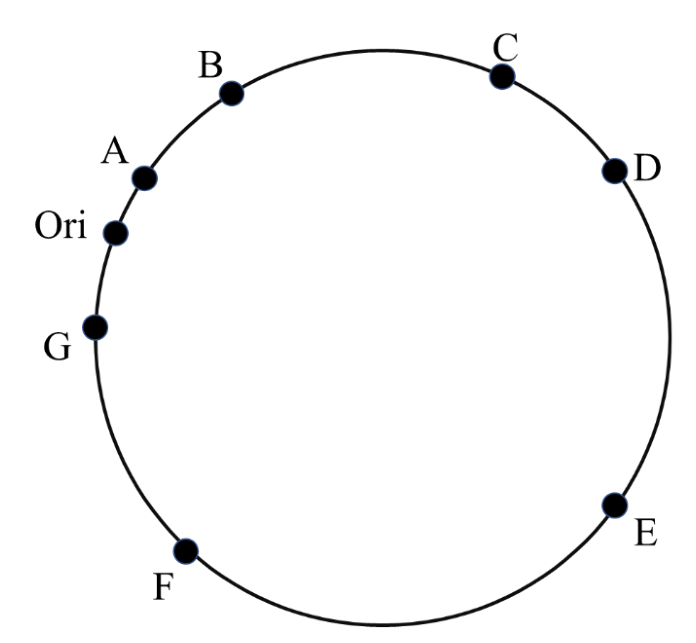
The origin of the Escherichia coli chromosome on the genetic map is shown below. Bidirectional replication is a feature of this system and both replication forks move at the same rate. Which one of the following sequences of replication of the genes is correct?