Difficulty distribution
How the classified questions are distributed by difficulty.
Your cart is empty.
Practice Practical Organic Chemistry - Organic Chemistry - Chemistry previous year questions organised from real papers, with year-wise coverage and clear topic navigation.
Every graph below is calculated only from this selection.
Year-wise coverage for Practical Organic Chemistry. Each bar uses a separate theme-derived color.
How the classified questions are distributed by difficulty.
MCQ, numerical, multiple-select and other formats found in these papers.
Top subjects by unique question coverage.
Top topics across the included previous year papers.
Top subtopics inside this exact selection.
Question coverage for the most populated papers. Every active PYP paper remains listed below.
Newest papers appear first. Sort by year, question coverage or name.
| Paper | Year / session | Questions in this view | Open |
|---|---|---|---|
| JEE ADVANCED 2025 PAPER 1 ONLINE | 2025 | 1 | View paper |
| JEE ADVANCED 2023 PAPER 2 ONLINE | 2023 | 1 | View paper |
| JEE ADVANCED 2022 PAPER 1 ONLINE | 2022 | 2 | View paper |
Practice every matching question in batches of 20, with every available option.
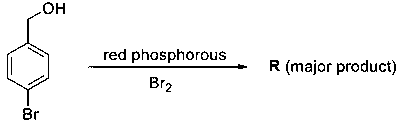
Consider the following reaction.

On estimation of bromine in $1.00 \mathrm{~g}$ of $\mathbf{R}$ using Carius method, the amount of $\mathrm{AgBr}$ formed (in $\mathrm{g}$ ) is ___________.
[Given: Atomic mass of $\mathrm{H}=1, \mathrm{C}=12, \mathrm{O}=16, \mathrm{P}=31, \mathrm{Br}=80, \mathrm{Ag}=108]$
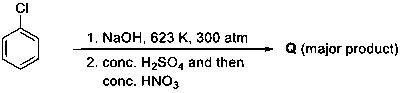
The weight percentage of hydrogen in $\mathbf{Q}$, formed in the following reaction sequence, is ________.

[Given: Atomic mass of $\mathrm{H}=1, \mathrm{C}=12, \mathrm{~N}=14, \mathrm{O}=16, \mathrm{~S}=32, \mathrm{Cl}=35$ ]
Match the compounds in List-I with the appropriate observations in List-II and choose the correct option.
| List–I | List–II |
|---|---|
(P) ![]() |
(1) Reaction with phenyl diazonium salt gives yellow dye. |
(Q) ![]() |
(2) Reaction with ninhydrin gives purple color and it also reacts with FeCl3 to give violet color. |
(R) ![]() |
(3) Reaction with glucose will give corresponding hydrazone. |
(S) ![]() |
(4) Lassiagne extract of the compound treated with dilute HCl followed by addition of aqueous $\mathrm{FeCl}_3$ gives blood red color. |
| (5) After complete hydrolysis, it will give ninhydrin test and it DOES NOT give positive phthalein dye test. |