Difficulty distribution
How the classified questions are distributed by difficulty.
Your cart is empty.
Practice Orthodox Systems - Classical Indian Philosophy - Philosophy previous year questions organised from real papers, with year-wise coverage and clear topic navigation.
Every graph below is calculated only from this selection.
Year-wise coverage for Orthodox Systems. Each bar uses a separate theme-derived color.
How the classified questions are distributed by difficulty.
MCQ, numerical, multiple-select and other formats found in these papers.
Top subjects by unique question coverage.
Top topics across the included previous year papers.
Top subtopics inside this exact selection.
Question coverage for the most populated papers. Every active PYP paper remains listed below.
Newest papers appear first. Sort by year, question coverage or name.
| Paper | Year / session | Questions in this view | Open |
|---|---|---|---|
| Humanities & Social Sciences - Philosophy (XH-C4) 2026 | 2026 | 9 | View paper |
| Humanities & Social Sciences-Philosophy (XH-C4) 2025 | 2025 | 6 | View paper |
| Humanities & Social Sciences-Philosophy (XH-C4) 2024 | 2024 | 7 | View paper |
| Humanities & Social Sciences-Philosophy (XH-C4) 2023 | 2023 | 6 | View paper |
| Humanities & Social Sciences-Philosophy (XH-C4) 2022 | 2022 | 6 | View paper |
Practice every matching question in batches of 20, with every available option.
According to Vaiśeṣika theory of atomism, which one of the following is NOT atomic?
In the theory of causation, the effect (kārya) is non-existent (asat) before its creation; it is a new beginning (ārambha). Which one of the following schools of thought in Indian philosophy upholds this theory?
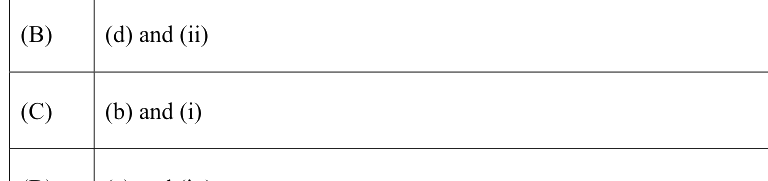
| Group - I | Group - II |
|---|---|
| (a) Dvaita | (i) Śaṅkara |
| (b) Śuddhādvaita | (ii) Rāmānuja |
| (c) Advaita | (iii) Madhva |
| (d) Viśiṣṭādvaita | (iv) Nimbārka |

In his Yogasūtra, Patañjali mentions five kinds of afflictions (kleśas). Which one of the following is NOT among the five afflictions?
Which one of the following philosophers is associated with Navya Nyāya (new school of Indian logic)?
Patañjali in his Yogasūtra (1.7) gives his theory of valid means of knowledge (pramāṇa). Among the following, which are NOT pramāṇa(s) according to the Yogasūtra?
According to Sāṅkhya philosophy, which of the following is/are the external organs/instruments (bāhyakaraṇa)?
Showing 20 of 34 questions