My Cart
Your Cart 0

    Your cart is empty.

  • Total (Amount) ₹0.00
Previous year question hub

Velocity Potential and Elementary Flows - Potential Flows - Engineering Sciences Previous Year Questions

Practice Velocity Potential and Elementary Flows - Potential Flows - Engineering Sciences previous year questions organised from real papers, with year-wise coverage and clear topic navigation.

18Papers
18Years
33Questions
1Topics

Velocity Potential and Elementary Flows question pattern

Every graph below is calculated only from this selection.

Questions by year

Year-wise coverage for Velocity Potential and Elementary Flows. Each bar uses a separate theme-derived color.

Difficulty distribution

How the classified questions are distributed by difficulty.

Medium 22 66.7%
Easy 11 33.3%

Question type distribution

MCQ, numerical, multiple-select and other formats found in these papers.

MCQ 31 93.9%
Numerical Answer Type (NAT) 2 6.1%

Subject weightage

Top subjects by unique question coverage.

Engineering Sciences
33 Qs

Most asked topics

Top topics across the included previous year papers.

Potential Flows
33 Qs

Subtopic coverage

Top subtopics inside this exact selection.

Velocity Potential and Elementary Flows
33 Qs

Paper coverage

Question coverage for the most populated papers. Every active PYP paper remains listed below.

Engineering Sciences (XE) 2026
1 Qs
Engineering Sciences (XE) 2025
1 Qs
Engineering Sciences (XE) 2023
3 Qs
Engineering Sciences (XE) 2022
1 Qs
Engineering Sciences (XE) 2020
1 Qs
Engineering Sciences (XE) 2019
2 Qs
Engineering Sciences (XE) 2018
1 Qs
Engineering Sciences (XE) 2017
2 Qs
Engineering Sciences (XE) 2016
3 Qs
Engineering Sciences (XE) 2015
2 Qs
Engineering Sciences (XE) 2014
3 Qs
Engineering Sciences (XE) 2013
2 Qs
Engineering Sciences (XE) 2012
1 Qs
Engineering Sciences (XE) 2011
2 Qs
Engineering Sciences (XE) 2010
1 Qs
Engineering Sciences (XE) 2009
1 Qs
Engineering Sciences (XE) 2008
4 Qs
Engineering Sciences (XE) 2007
2 Qs

Included previous year papers

Newest papers appear first. Sort by year, question coverage or name.

PaperYear / sessionQuestions in this viewOpen
Engineering Sciences (XE) 202620261View paper
Engineering Sciences (XE) 202520251View paper
Engineering Sciences (XE) 202320233View paper
Engineering Sciences (XE) 202220221View paper
Engineering Sciences (XE) 202020201View paper
Engineering Sciences (XE) 201920192View paper
Engineering Sciences (XE) 201820181View paper
Engineering Sciences (XE) 201720172View paper
Engineering Sciences (XE) 201620163View paper
Engineering Sciences (XE) 201520152View paper
Engineering Sciences (XE) 201420143View paper
Engineering Sciences (XE) 201320132View paper
Engineering Sciences (XE) 201220121View paper
Engineering Sciences (XE) 201120112View paper
Engineering Sciences (XE) 201020101View paper
Engineering Sciences (XE) 200920091View paper
Engineering Sciences (XE) 200820084View paper
Engineering Sciences (XE) 200720072View paper

All Velocity Potential and Elementary Flows previous year questions

Practice every matching question in batches of 20, with every available option.

1
2007 · Engineering Sciences · Potential Flows · Velocity Potential and Elementary Flows
Engineering Sciences (XE) 2007

If the source and sink are placed in a uniform approach stream, the resulting external flow corresponds to that

Open complete paper
2
2007 · Engineering Sciences · Potential Flows · Velocity Potential and Elementary Flows
Engineering Sciences (XE) 2007
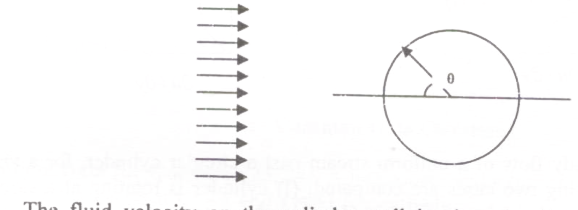
A uniform stream of an ideal fluid with velocity \( U \) and pressure \( p_\infty \) flows past a circular cylinder as shown in the figure below. The fluid velocity on the cylinder wall is given by \( V_\theta = 2U \sin \theta \). The pressure coefficient is defined as \( C_p = \frac{p - p_\infty}{0.5 \rho U^2} \). The minimum value of \( C_p \) on the surface of the cylinder is

Question diagram

Open complete paper
3
2008 · Engineering Sciences · Potential Flows · Velocity Potential and Elementary Flows
Engineering Sciences (XE) 2008
A potential function can be defined for a flow if and only if it is
Open complete paper
4
2008 · Engineering Sciences · Potential Flows · Velocity Potential and Elementary Flows
Engineering Sciences (XE) 2008
What is the radius of the cylinder?

Question diagram

Open complete paper
5
2008 · Engineering Sciences · Potential Flows · Velocity Potential and Elementary Flows
Engineering Sciences (XE) 2008

Where are the stagnation points located?

Question diagram

Open complete paper
6
2008 · Engineering Sciences · Potential Flows · Velocity Potential and Elementary Flows
Engineering Sciences (XE) 2008
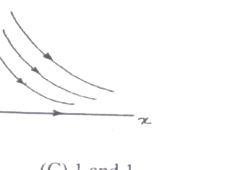
The stream function for a potential flow around a corner is given by ψ(x, y) = kxy, where k is a constant. The slopes of the streamline and the potential line passing through the point (1,1) are respectively

Question diagram

Open complete paper
7
2009 · Engineering Sciences · Potential Flows · Velocity Potential and Elementary Flows
Engineering Sciences (XE) 2009
Common Data for Questions 19 and 20:
A long cylindrical object submerged in still water is moving at a constant speed of 5 m/s perpendicular to its axis, as shown in the figure. Neglect viscous effects and assume free stream pressure to be 100 kPa.
The fluid velocity at point P with respect to the cylinder will be approximately
Open complete paper
8
2010 · Engineering Sciences · Potential Flows · Velocity Potential and Elementary Flows
Engineering Sciences (XE) 2010

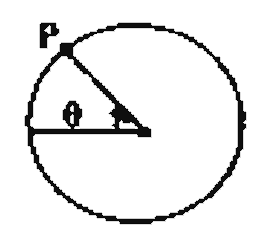
Consider an ideal fluid flow past a circular cylinder shown in the figure below. The peripheral velocity at a point P on the surface of the cylinder is

Open complete paper
9
2011 · Engineering Sciences · Potential Flows · Velocity Potential and Elementary Flows
Engineering Sciences (XE) 2011

The drags due to potential flow past a cylinder of diameter D cm and a slender airfoil of chord length D cm are compared. Assuming unit depth for both the bodies, which one of the following would be TRUE?

Open complete paper
10
2011 · Engineering Sciences · Potential Flows · Velocity Potential and Elementary Flows
Engineering Sciences (XE) 2011
The velocity potential \(\phi(x, y)\) for the flow is
Open complete paper
11
2012 · Engineering Sciences · Potential Flows · Velocity Potential and Elementary Flows
Engineering Sciences (XE) 2012
In a potential flow, the superposition of the stream functions of a uniform flow and a line source gives rise to a dividing streamline representing
Open complete paper
12
2013 · Engineering Sciences · Potential Flows · Velocity Potential and Elementary Flows
Engineering Sciences (XE) 2013

Flow past a circular cylinder can be produced by superposition of the following elementary potential flows:

Open complete paper
13
2013 · Engineering Sciences · Potential Flows · Velocity Potential and Elementary Flows
Engineering Sciences (XE) 2013
The stream function for a potential flow field is given by \(\psi = x^2 - y^2\). The corresponding potential function, assuming zero potential at the origin, is
Open complete paper
14
2014 · Engineering Sciences · Potential Flows · Velocity Potential and Elementary Flows
Engineering Sciences (XE) 2014

Flow around a Rankine half-body is represented by the superposition of

Open complete paper
15
2014 · Engineering Sciences · Potential Flows · Velocity Potential and Elementary Flows
Engineering Sciences (XE) 2014
A source with a strength of \(k_1\) and a vortex with a strength of \(k_2\) are located at the origin. The resultant velocity at a radial distance \(r\) from the origin due to the superposition of the source and vortex is expressed as
Open complete paper
16
2014 · Engineering Sciences · Potential Flows · Velocity Potential and Elementary Flows
Engineering Sciences (XE) 2014
In a steady state two-dimensional potential flow field due to a point source, the acceleration of a particle at a distance \( r \) from the point source is
Open complete paper
17
2015 · Engineering Sciences · Potential Flows · Velocity Potential and Elementary Flows
Engineering Sciences (XE) 2015
Consider a combined forced-free vortex. The central region with radius \(R\) and angular velocity \(\omega\) is the forced vortex and the rest is the free vortex. The pressure at the edge of the combined vortex is \(p_o\). If the density of the fluid is \(\rho\), the pressure at the center of the combined vortex is

Question diagram

Open complete paper
18
2015 · Engineering Sciences · Potential Flows · Velocity Potential and Elementary Flows
Engineering Sciences (XE) 2015
Consider a two-dimensional potential flow field with the radial and tangential velocity components, \(v_r = \frac{m}{2\pi r}\) and \(v_\theta = \frac{k}{2\pi r}\), respectively, where \(m\) and \(k\) are constants. The stream function is such that it increases along the direction of traverse of a line in the flow field if the flow is from left to right across that line. The stream function \(\psi\) for this flow field, with \(\psi = 0\) at \(r = a\) and \(\theta = 0\), is
Open complete paper
19
2016 · Engineering Sciences · Potential Flows · Velocity Potential and Elementary Flows
Engineering Sciences (XE) 2016
Velocity potential and stream function in polar coordinates ( \( r \), \( \theta \) ) for a potential flow over a cylinder with radius \( R \) is given as \( \phi = U_{\infty} (r+\frac{R^2}{r})\cos\theta \) and \( \psi = U_{\infty} (r-\frac{R^2}{r})\sin\theta \), respectively. Here, \( U_{\infty} \) denotes uniform freestream velocity, and \( \theta \) is measured counter clockwise as shown in the figure. How does the velocity magnitude, \( q \), over the surface of the cylinder will vary?
Open complete paper
20
2016 · Engineering Sciences · Potential Flows · Velocity Potential and Elementary Flows
Engineering Sciences (XE) 2016
If \(\phi(x, y)\) is velocity potential and \(\psi(x, y)\) is stream function for a 2-D, steady, incompressible and irrotational flow, which one of the followings is incorrect?
Open complete paper

Showing 20 of 33 questions