Difficulty distribution
How the classified questions are distributed by difficulty.
29questions
Not classified
29
100%
Your cart is empty.
Practice 29 MCQ PYQs on Chemical Kinetics (Physical Chemistry) from AP EAPCET previous year exams. Year-wise, 25 papers, mock test prep.
Every graph below is calculated only from this selection.
Year-wise coverage for Chemical Kinetics. Each bar uses a separate theme-derived color.
How the classified questions are distributed by difficulty.
MCQ, numerical, multiple-select and other formats found in these papers.
Top subjects by unique question coverage.
Top topics across the included previous year papers.
Top subtopics inside this exact selection.
Question coverage for the most populated papers. Every active PYP paper remains listed below.
Newest papers appear first. Sort by year, question coverage or name.
| Paper | Year / session | Questions in this view | Open |
|---|---|---|---|
| AP EAPCET 2025 21ST MAY EVENING SHIFT | 2025 | 2 | View paper |
| AP EAPCET 2025 21ST MAY MORNING SHIFT | 2025 | 1 | View paper |
| AP EAPCET 2025 22ND MAY EVENING SHIFT | 2025 | 1 | View paper |
| AP EAPCET 2025 22ND MAY MORNING SHIFT | 2025 | 1 | View paper |
| AP EAPCET 2025 23RD MAY EVENING SHIFT | 2025 | 1 | View paper |
| AP EAPCET 2025 23RD MAY MORNING SHIFT | 2025 | 1 | View paper |
| AP EAPCET 2025 24TH MAY MORNING SHIFT | 2025 | 1 | View paper |
| AP EAPCET 2025 26TH MAY EVENING SHIFT | 2025 | 1 | View paper |
| AP EAPCET 2025 26TH MAY MORNING SHIFT | 2025 | 1 | View paper |
| AP EAPCET 2025 27TH MAY MORNING SHIFT | 2025 | 1 | View paper |
| AP EAPCET 2024 18TH MAY MORNING SHIFT | 2024 | 1 | View paper |
| AP EAPCET 2024 19TH MAY EVENING SHIFT | 2024 | 2 | View paper |
| AP EAPCET 2024 20TH MAY EVENING SHIFT | 2024 | 1 | View paper |
| AP EAPCET 2024 20TH MAY MORNING SHIFT | 2024 | 1 | View paper |
| AP EAPCET 2024 21TH MAY EVENING SHIFT | 2024 | 1 | View paper |
| AP EAPCET 2024 21TH MAY MORNING SHIFT | 2024 | 1 | View paper |
| AP EAPCET 2024 22TH MAY EVENING SHIFT | 2024 | 1 | View paper |
| AP EAPCET 2024 22TH MAY MORNING SHIFT | 2024 | 1 | View paper |
| AP EAPCET 2024 23TH MAY MORNING SHIFT | 2024 | 1 | View paper |
| AP EAPCET 2022 4TH JULY EVENING SHIFT | 2022 | 1 | View paper |
| AP EAPCET 2022 4TH JULY MORNING SHIFT | 2022 | 1 | View paper |
| AP EAPCET 2022 5TH JULY MORNING SHIFT | 2022 | 1 | View paper |
| AP EAPCET 2021 19TH AUGUST MORNING SHIFT | 2021 | 1 | View paper |
| AP EAPCET 2021 20TH AUGUST EVENING SHIFT | 2021 | 2 | View paper |
| AP EAPCET 2021 20TH AUGUST MORNING SHIFT | 2021 | 2 | View paper |
Practice every matching question in batches of 20, with every available option.
If the rate constant for a first order reaction is \(2.303 \times 10^{-3} \mathrm{~s}^{-1}\). Find the time required to reduce \(4 \mathrm{~g}\) of the reactant to \(0.2 \mathrm{~g}\).
For a \(A+B \rightarrow\) products, the rate of the reaction is given by rate \(=k[A][B]^2\). The units of rate constant \((k)\) will be
For an elementary reaction, \(X(g) \longrightarrow Y(g)+Z(g)\), the \(t_{1 / 2}\) is \(10 \mathrm{~min}\). In what period of time would the concentration of \(X\) be reduced to \(10 \%\) of its original concentration?
Which statement among the following is incorrect?
For zero order reaction, a plot of \(t_{1 / 2}\) versus \([A]_0\) will be
The time required for completion of \(93.75 \%\) of a first order reaction is \(x\) minutes. The half-life of it (in minutes) is
. The rate constant for a zero order reaction \(A \longrightarrow\) products is \(0.0030 \mathrm{~mol} \mathrm{~L}^{-1} \mathrm{~S}^{-1}\). How long it will take for the initial concentration of \(A\) to fall from 0.10 M to 0.075 M ?
The rate constant of a reaction at 500 K and 700 K are \(0.02 \mathrm{~s}^{-1}\) and \(0.2 \mathrm{~s}^{-1}\) respectively. The activation energy of the reaction (in \(\left.\mathrm{kJ} \mathrm{mol}^{-1}\right)\) is \(\left(R=8.3 \mathrm{JK}^{-1} \mathrm{~mol}^{-1}\right)\)
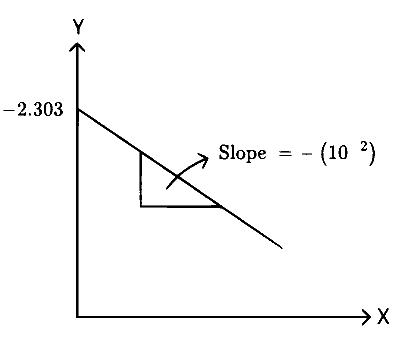
For a first order reaction the concentration of reactant was reduced from $0.03 \mathrm{molL}^{-1}$ to $0.02 \mathrm{molL}^{-1}$ in 25 min . What is its rate (in $\mathrm{molL}^{-1} \mathrm{~s}^{-1}$ )?
Isomerisation of gaseous cyclobutene to butadiene is first order reaction. At $T(\mathrm{~K})$. The rate constant of reaction is $33 \times 10^{-4} \mathrm{~s}^{-1}$. What is the time required (in min ) to complete $90 \%$ of this reaction at the temperature? $(\log 2=03)$
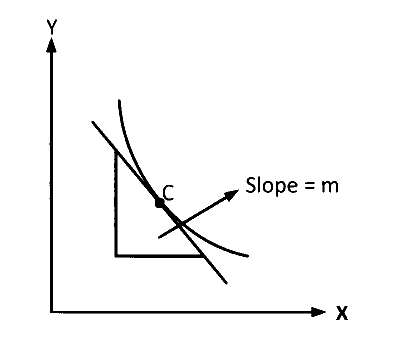
$A \rightarrow$ products, is a first order reaction. The following data is obtained for this reaction at $T(\mathrm{~K})$. The value of $x: y$ is
$$\begin{array}{cc} \hline \text { Rate }\left(\mathrm{molL}^{-1} \mathrm{~min}^{-1}\right) & {[A]} \\ \hline 0.2 & 0.02 \mathrm{M} \\ \hline 0.4 & x \mathrm{M} \\ \hline 1.0 & y \mathrm{M} \\ \hline \end{array}$$
Activation energy for the hydrolysis of sucrose by acid is $X \mathrm{~kJ} \mathrm{~mol}^{-1}$ whereas activation energy for the hydrolysis of sucrose by sucrase is $Y \mathrm{~kJ} \mathrm{~mol}^{-1} . X$ and $Y$ respectively are
Showing 20 of 29 questions