Difficulty distribution
How the classified questions are distributed by difficulty.
9questions
Not classified
9
100%
Your cart is empty.
Practice IUPAC nomenclature PYQs for AP EAPCET Chemistry — 9 MCQs from 8 papers (4 years). Topic-wise previous year questions for exam practice.
Every graph below is calculated only from this selection.
Year-wise coverage for Iupac Nomenclature. Each bar uses a separate theme-derived color.
How the classified questions are distributed by difficulty.
MCQ, numerical, multiple-select and other formats found in these papers.
Top subjects by unique question coverage.
Top topics across the included previous year papers.
Top subtopics inside this exact selection.
Question coverage for the most populated papers. Every active PYP paper remains listed below.
Newest papers appear first. Sort by year, question coverage or name.
| Paper | Year / session | Questions in this view | Open |
|---|---|---|---|
| AP EAPCET 2025 21ST MAY MORNING SHIFT | 2025 | 1 | View paper |
| AP EAPCET 2025 22ND MAY MORNING SHIFT | 2025 | 1 | View paper |
| AP EAPCET 2025 23RD MAY EVENING SHIFT | 2025 | 1 | View paper |
| AP EAPCET 2025 23RD MAY MORNING SHIFT | 2025 | 1 | View paper |
| AP EAPCET 2025 26TH MAY EVENING SHIFT | 2025 | 1 | View paper |
| AP EAPCET 2024 21TH MAY EVENING SHIFT | 2024 | 1 | View paper |
| AP EAPCET 2022 5TH JULY MORNING SHIFT | 2022 | 1 | View paper |
| AP EAPCET 2021 19TH AUGUST EVENING SHIFT | 2021 | 2 | View paper |
Practice every matching question in batches of 20, with every available option.
What is the IUPAC name of \(\mathrm{CH}_3 \mathrm{CH}\left(\mathrm{CH}_2 \mathrm{CH}_3\right) \mathrm{CHO}\) ?
The IUPAC name of diacetone alcohol is.
The IUPAC name of the following compound is
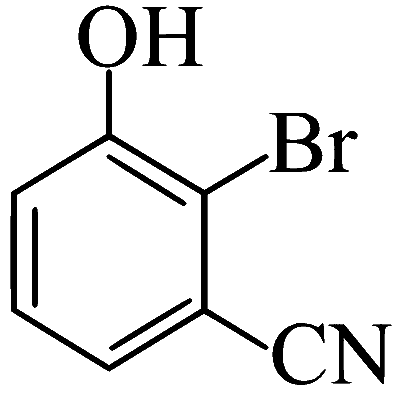
\(\text { IUPAC names of the following compounds } A \text { and } B\) are
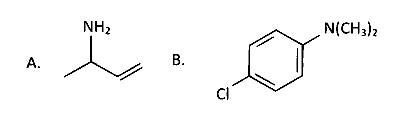
$$\text { The IUPAC name of the following compound is }$$
The correct decreasing order of priority for the functional group of organic compounds in the IUPAC method of nomenclature is
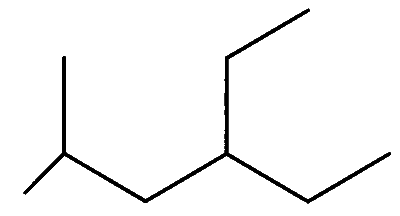
$$\text { IUPAC name of the following compound is }$$
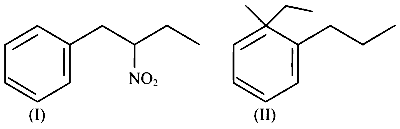
IUPAC names of the given compounds (I) and (II) are respectively