- Total number of questions: 65
- 30 questions carry one mark each
- 35 questions carry two marks each
- Negative marking: 1/3 of the marks allotted to the question
- Use of calculator is allowed
- This is a proctored examination
- All other browser applications will be automatically closed
- After three warnings, the examination window will close automatically
Exam Details
Electrical Engineering (EE) 2017 [Session 1]
Review the key details, then start the test when you are ready. You can also open the full package to see related papers.
Questions
65
Duration
180 mins
Package
Electrical Engineering (EE) - Previous Year Papers
Paper pattern & analysis
Filter this paper by subject, topic or subtopic. Every graph updates from the selected questions.
Topic distribution
Subtopic distribution
Difficulty distribution
65questions
Easy
41
63.1%
Hard
24
36.9%
Question type distribution
65questions
Multiple Choices
41
63.1%
Fill in the blanks
24
36.9%
Instructions
Electrical Engineering (EE) 2017 [Session 1] – Instructions
Syllabus
Full Syllabus
Sample questions from this paper
Questions are selected across the paper subjects wherever the paper contains that variety.
2017 · Unclassified
Electrical Engineering (EE) 2017 [Session 1]
Q.1 – Q.5 carry one mark each.
The matrix A =

A
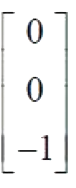
B
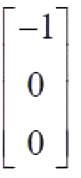
C

D

2017 · Unclassified
Electrical Engineering (EE) 2017 [Session 1]
Correct : 1 Wrong : -0.33
For a complex number z, lim (z → i) (z2 + 1) / (z3 + 2z - i(z2 + 2)) is
2017 · Unclassified
Electrical Engineering (EE) 2017 [Session 1]
Correct : 1 Wrong : -0.33
Let z(t) = x(t) * y(t), where '*' denotes convolution. Let c be a positive real-valued constant. Choose the correct expression for z(ct).
2017 · Unclassified
Electrical Engineering (EE) 2017 [Session 1]
Correct: 1 Wrong: -0.33
A solid iron cylinder is placed in a region containing a uniform magnetic field such that the cylinder axis is parallel to the magnetic field direction. The magnetic field lines inside the cylinder will
2017 · Unclassified
Electrical Engineering (EE) 2017 [Session 1]
Correct: 1 Wrong: -0.33
Consider an electron, a neutron and a proton initially at rest and placed along a straight line such that the neutron is exactly at the center of the line joining the electron and proton. At t = 0, the particles are released but are constrained to move along the same straight line. Which of these will collide first?
2017 · Unclassified
Electrical Engineering (EE) 2017 [Session 1]
Q.6 – Q.10 carry two marks each.
The transfer function of a system is given by, V0(s)/Vi(s) = (1-s)/(1+s). Let the output of the system be v0(t) = Vm sin(ωt + φ) for the input, vi(t) = Vm sin(ωt). Then the minimum and maximum values of φ (in radians) are respectively