My Cart
Your Cart 0

    Your cart is empty.

  • Total (Amount) ₹0.00
NCERT Exemplar · Class 11 · Chemistry

Chapter 2: Structure of Atom

Practice each question, then open the answer or worked solution.

Short Answer Questions

29 questions
Q22Written answer

Arrange s, p and d sub-shells of a shell in the increasing order of effective nuclear charge (Zeff) experienced by the electron present in them.

Show solutionHide solution
Worked solution

Ans: The effective nuclear charge(Zeff) is defined as the net positive charge experienced by the outermost electrons in the atom.With the increase of Azimuthal quantum number(l) the Zeff experienced by the electron decreases .

Hence the arrangement of subshells in the increasing order of Zeff is: d<p<s

Q23Written answer

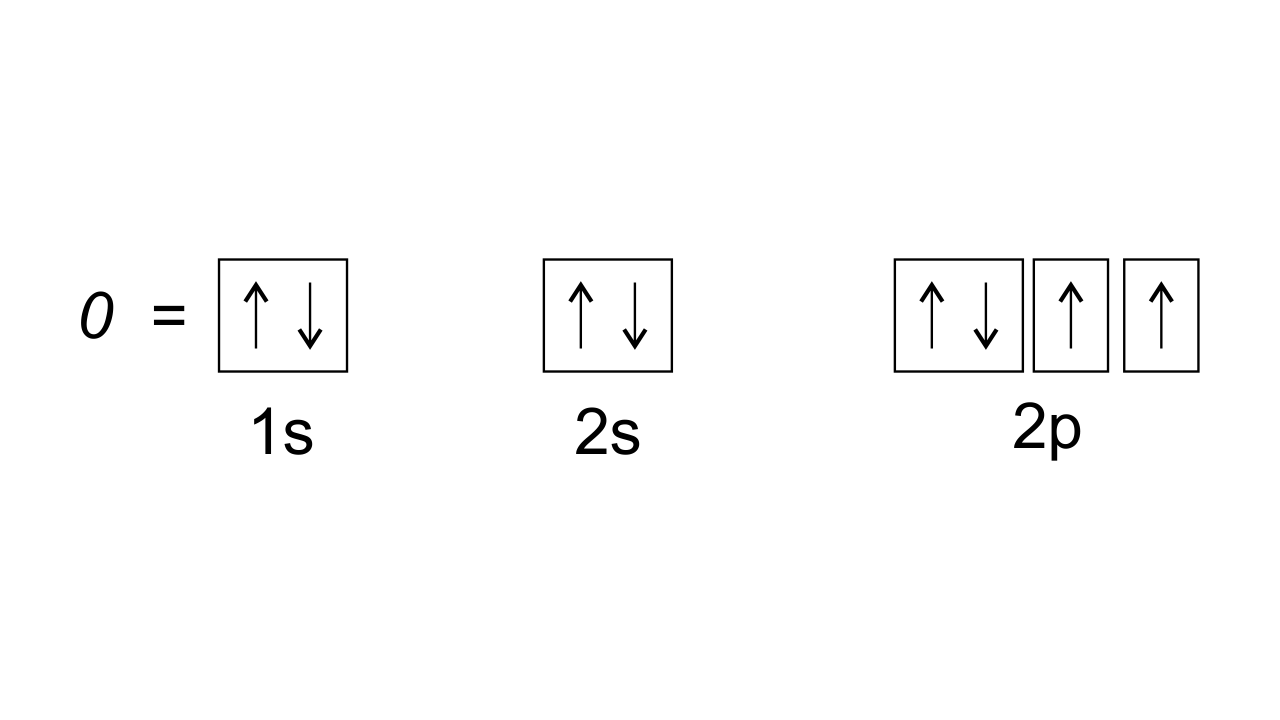
Show the distribution of electrons in oxygen atoms (atomic number 8) using an orbital diagram.

Show solutionHide solution
Worked solution

Ans: The electronic configuration of oxygen atom is 1s2 2s2 2p4 and its orbital diagram is given by


seo images


Q24Written answer

Nickel atom can lose two electrons to form Ni2+ ion. The atomic number of nickel is 28. From which orbital will nickel lose two electrons.

Show solutionHide solution
Worked solution

Ans: The electronic configuration of nickel is  1s2 2s2 2p6 3s2 3p6 3d8 4s2 , thus it loses electrons from its 4s orbital as its energy is higher compared to the other orbital. 


Q25Written answer

Which of the following orbitals are degenerate? 

3dxy , 4dxy , 3d${{\mathbf{z}}^{2}}$ , 3dyz , 4dyz ,4d${{\mathbf{z}}^{2}}$ 

Show solutionHide solution
Worked solution

Ans: In a multielectron atomic system the energy of an electron depends not only on its principal quantum number (shell), but also on its azimuthal quantum number (subshell). Electrons having the same shells and same subshells have the same energy and they are known as degenerate orbitals.

Thus 3dxy ,3d${{\text{z}}^{2}}$ ,  3dyz  and 4dxy , 4dyz , 4d${{\text{z}}^{2}}$ are degenerate.


Q26Written answer

Calculate the total number of angular nodes and radial nodes present in 3p orbital

Show solutionHide solution
Worked solution

Ans: The number of radial nodes is given by n-l-1,where n is principal quantum number, l is azimuthal quantum number.

The number of angular nodes is given by n-l, where n is principal quantum number, l is azimuthal quantum number.

Here n =3 and l =1 

Thus, angular nodes = 3-1 = 2 and radial node = 3-1-1 = 1


Q27Written answer

The arrangement of orbitals on the basis of energy is based upon their  (n+l ) value. Lower the value of (n+l ), lower is the energy. For orbitals having same values of (n+l), the orbital with lower value of n will have lower energy. 

I. Based upon the above information, arrange the following orbitals in the increasing order of energy. 

(a) 1s, 2s, 3s, 2p

(b) 4s, 3s, 3p, 4d

(c) 5p, 4d, 5d, 4f, 6s 

(d) 5f, 6d, 7s, 7p 

II. Based upon the above information, solve the questions given below : 

(a) Which of the following orbitals has the lowest energy? 4d, 4f, 5s, 5p 

(b) Which of the following orbitals has the highest energy? 5p, 5d, 5f, 6s, 6p

Show solutionHide solution
Worked solution

Ans:

Orbitals

s

p

d

f

l

0

1

2

3

(a)

orbitals

n

n+l

1s

1

1

2s

2

2

3s

3

3

2p

2

3

Thus the increasing order of energy is 1s<2s<2p<3s

(b)

orbitals

n

n+l

4s

4

4

3s

3

3

3p

3

4

4d

4

6


Thus the increasing order of energy is 3s<3p<4s<4d

(c)

orbitals

n

n+l

5p

5

6

4d

4

6

5d

5

7

4f

4

7

6s

6

6

Thus the increasing order of energy is 4d<5p<6s<4f<5d

(d)

orbitals

n

n+l

5f

5

8

6d

6

8

7s

7

7

7p

7

8

Thus the increasing order of energy is 7s<5f<6d<7p

II.

(a)

Orbitals

n

n+l

4d

4

6

4f

4

7

5s

5

5

5p

5

6

The lowest energy orbital is 5s

(b)

Orbitals

n

n+l

5p

5

6

5d

5

7

5f

5

8

6s

6

6

6p

6

7

The highest energy orbital is 5f


Q28Written answer

Which of the following will not show deflection from the path on passing through an electric field? Proton, cathode rays, electron, neutron

Show solutionHide solution
Worked solution

Ans: The charged particles get deflected by the electric field.As among the given option only neutron is the particle that is neutral thus it does not get deflected by the electric field.


Q29Written answer

An atom having atomic mass number 13 has 7 neutrons. What is the atomic number of the atom?

Show solutionHide solution
Worked solution

Ans: The mass number (A) is defined as the sum of the number of protons and neutrons present in  the nucleus and the atomic number is defined as the number of protons or electrons present in an atom.

Thus  A=13,the number of neutrons is 7 so the number of protons is 6.

Thus the atomic number is 6.


Q30Written answer

Wavelengths of different radiations are given below :

 λ(A) = 300 nm     λ(B)= 300µm       λ(C) = 3 nm         λ (D) = 30 A0 

Arrange these radiations in the increasing order of their energies.

Show solutionHide solution
Worked solution

Ans:

1nm

10-9m

1µm

10-6m

1A0

10-10m

We know that energy is inversely proportional to the wavelength.

300 nm

3×10⁻⁷m

300µm 

3×10⁻⁴m

3 nm

3×10⁻⁹m

30 A0

3×10⁻⁹m


Thus the increasing order of energy is B<A<C=D


Q31Written answer

The electronic configuration of valence shell of Cu is 3d104s1 and not 3d94s2. How is this configuration explained?

Show solutionHide solution
Worked solution

Ans: As per the Hund’s rule the half filled and fully filled orbital leads to the extra stability due to the symmetry thus fully filled 3d and half filled 4s is preferred.