Q11Written answer
Question: 11
Colour the share Raju got.
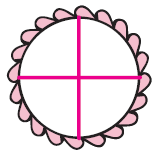
Show solutionHide solution
Worked solution
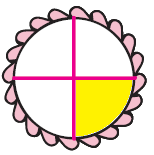
Answer: The shaded part shows 1/4 part of the cake, which Raju has got.
Your cart is empty.
Practice each question, then open the answer or worked solution.
Question: 11
Colour the share Raju got.
Answer: The shaded part shows 1/4 part of the cake, which Raju has got.
Question: 12
How much of the cake do Rajni and Raju together get? Colour their total share.
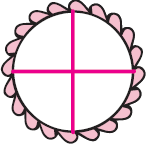
Answer: The total cake together Rajni and Raju got is 3/4

NCERT book Page No: 99
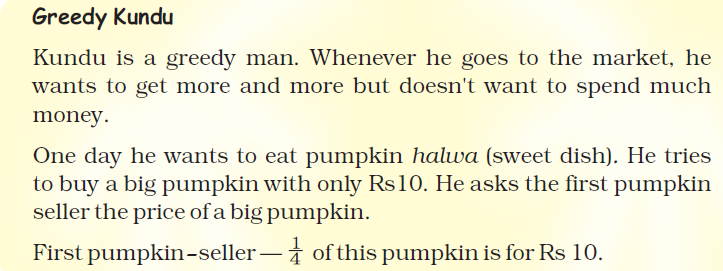
Question: 13
The full pumpkin will cost Rs. _________
Answer: Cost of 1/4 pumpkin = Rs. 10
Cost of one pumpkin = Rs 10 ÷ 1/4
= 10 × 4
= 40
Hence, the cost of one pumpkin = Rs. 40.
Question: 14
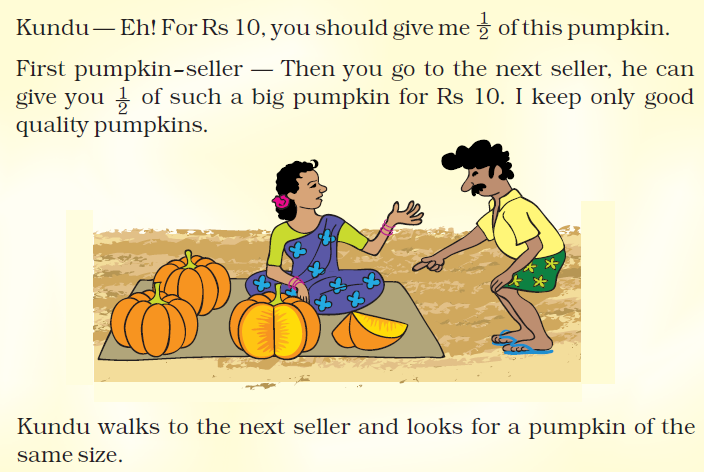
Kundu, how much of this pumpkin will I get for Rs 10? The second pumpkin seller told him half.
This full pumpkin will cost Rs. _________
Answer: The cost of half a pumpkin = Rs. 10
So, the cost of full pumpkin = Rs. 10 + Rs. 10
= Rs. 20
Therefore, the cost of one full pumpkin is Rs. 20.
NCERT Book Page No: 100
Using a Price List
Question: 15
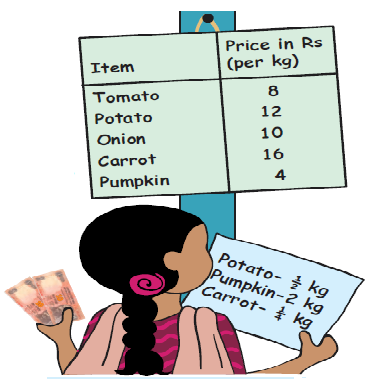
(a) How much does 1/2 kg of tomatoes cost?
Answer: The cost of 1 kg tomato = Rs. 8
Hence, the cost of 1/2 kg tomato = Rs. 8 / 2
= Rs. 4
Therefore, the cost of 1/2 kg tomatoes = Rs. 4
(b) Which costs more – 1/2 kg of onions or 1/4 kg of carrots?
Answer: The cost of 1 kg onion = Rs. 10
Therefore, the cost of 1/2 kg onion = 10 / 2
= Rs. 5
The cost of 1 kg carrot = Rs. 16
Hence, the cost of 1/4 kg carrot = 16 / 4
= Rs. 4
Hence, the cost of 1/2 kg of onions is more than the cost of 1/4 kg of carrots.
(c) What is the price of 3/4 kg of potatoes?
Answer: The cost of 1 kg of potatoes = Rs. 12
The cost of 3/4 kg of potatoes = Rs. 12 × 3/4
= Rs. 36/4
= Rs. 9
Therefore, the cost of 3/4 kg of potatoes = Rs. 9
(d) Keerthi is going for shopping. She has only Rs. 20 with her. Can she buy all the things on her shopping list?
Answer: Total money Keerthi has = Rs. 20
Her shopping list includes = 1/2 kg potatoes, 2 kg pumpkin and 1/4 kg carrots.
Cost of 1 kg potatoes = Rs. 12
Cost of 1/2 kg potatoes = Rs. 12 / 2
= 6
Cost of 1 kg pumpkin = Rs. 4
Cost of 2 kg pumpkin = Rs. 4 × 2
= Rs. 8
Cost of 1 kg carrot = Rs. 16
Cost of 1/4 kg carrot = Rs. 16/4
= Rs. 4
Total cost of all the vegetables = 6 + 8 + 4
= Rs. 18
Hence, Keerthi can buy all the vegetables on her shopping list.
NCERT Book Page No: 101-103
Practice Time
Question: 16
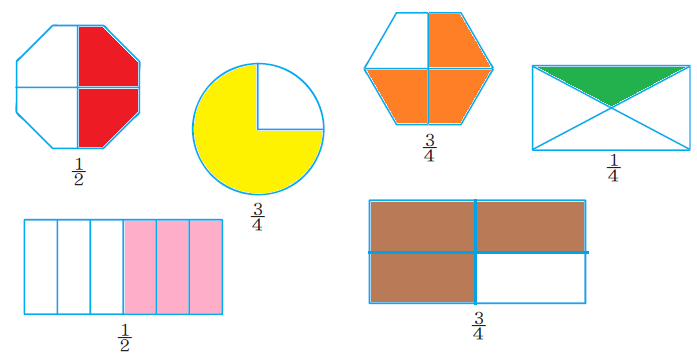
(a) What part of the whole is coloured? Write below each shape.
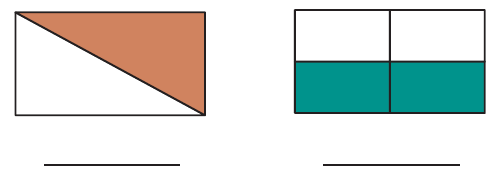
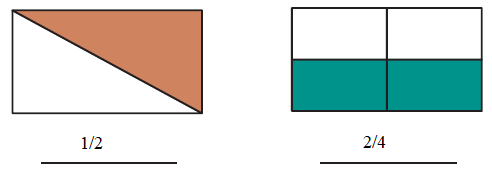
(b) Colour that part of the shape which is written below.
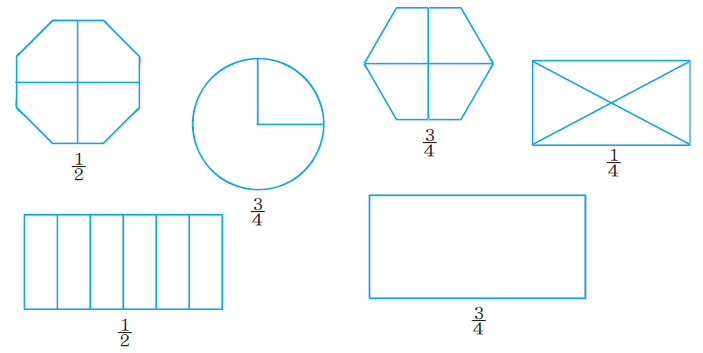
(c) Cut in half
Draw a line which divides the below shapes into half.
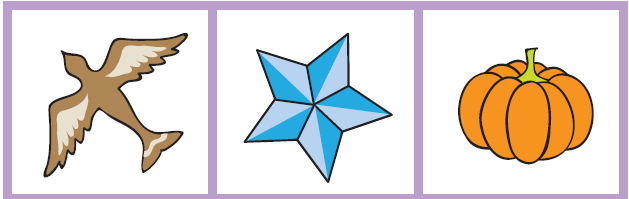
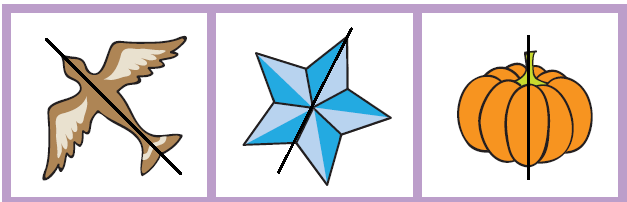
(d) Colour half the number of shapes as shown here.
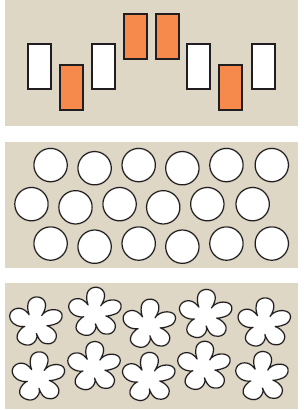
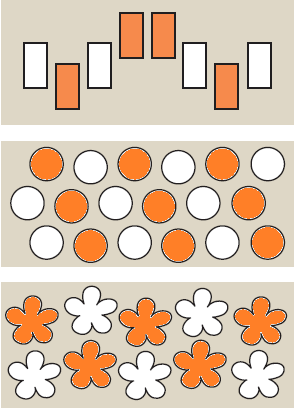
(e) Colour 1/4 of these shapes.
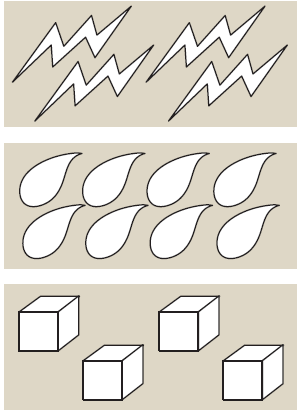
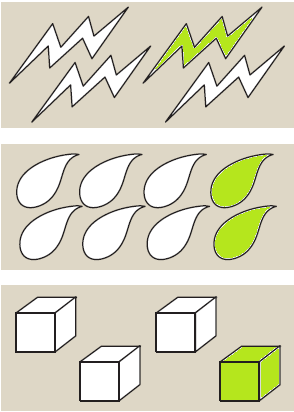
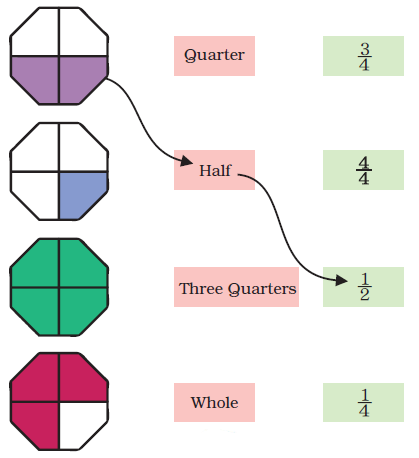
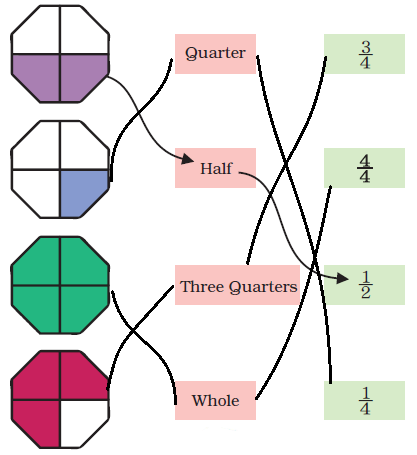
(f) Match the coloured part as shown.
(g) Make the other half
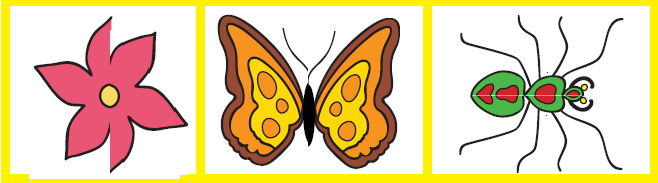
1/2 of the picture is drawn here. Can you complete the picture by drawing the other half?
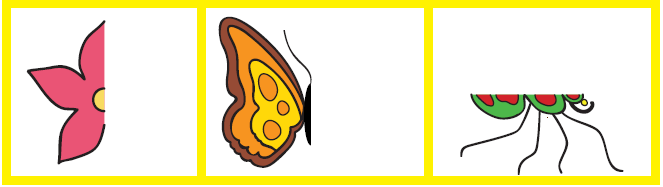
(h) This is a quarter of a picture. Can you complete it? How many more quarters will you draw to complete it?


To complete the picture, three more quarters are required.
i.e, half and a quarter of a metre
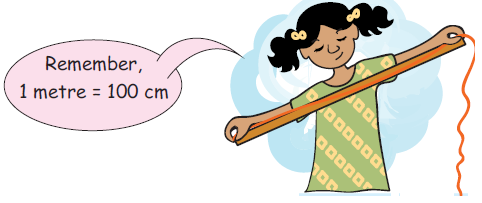
Using your metre scale, cut a string of one metre.
On this string, mark the length 1/2 metre, 1/4 metre and 3/4 metre.
Using your string, draw a line of length ½ metre on the floor.
Question: 17
How many centimetres long is the line?
Answer: We know
1 m = 100 cm
1/2 m on the floor = 100 cm ÷ 2
= 50 cm
Hence, 1/2 m on the floor = 50 cm long
Question: 18
So,
1/2 metre = ………….. cm
1/4 metre = ………….. cm
3/4 metre = ………….. cm
Can you see that when we add 1/2 and 1/4, we get 3/4?
1/2 metre = 100 × 1/2
= 50 cm
1/4 metre = 100 × 1/4
= 25 cm
3/4 metre = 100 × 3/4
= 75 cm
Now, adding 1/2 and 1/4, we get
1/2 + 1/4 = (2 + 1)/4
= 3/4
Hence, on adding 1/2 and 1/4, we get 3/4.
NCERT Book Page No: 104
Sharing Milk
A bottle is full of milk, and it holds one litre. The milk is put into 4 other bottles so that each bottle has 1/4 litre of milk.
Question: 19
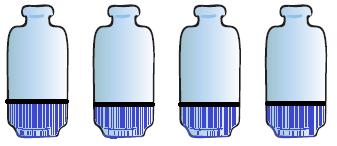
Shade the bottles to show the level of milk in each.
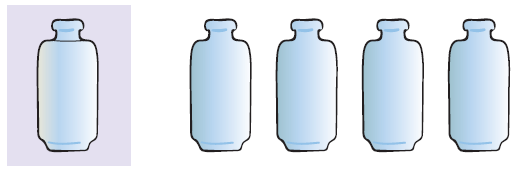
The shaded portion shows the level of milk marked in the figure given below
Question: 20
How many millilitres of milk does each bottle have?
We know,
1 litre = 1000 millimetres
Each bottle contains = 1/4 litre of milk
Hence, each bottle contains = 1000 mL ÷ 4
= 250 mL of milk.